
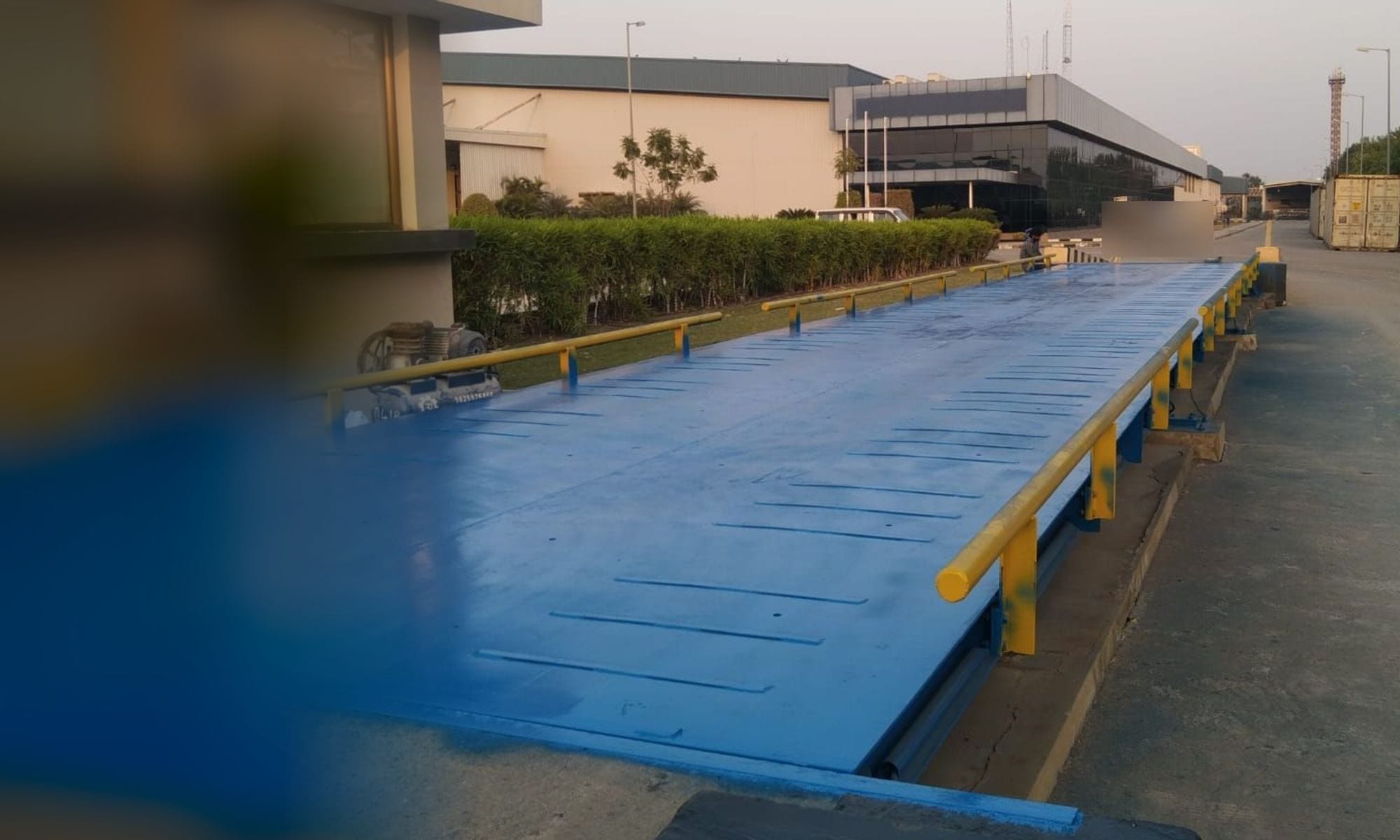
Sachin GIDC weighbridges for boiler fuel, dye houses and ash.
Sachin GIDC, on the southern side of Surat, is one of Gujarat's large industrial estates, best known for the textile dyeing and printing houses that finish Surat's synthetic fabric, alongside dye, chemical and engineering units. Most process houses run boilers, so coal, lignite and other boiler fuel arrive by tipper every day and ash leaves the same way. Symphony supplies weighbridges, truck scales and dharam kanta (धर्म कांटा) for units across Sachin GIDC and the estates around it.
A Sachin GIDC processing house usually needs a 60 MT, 16 m pit-less weighbridge (dharam kanta, truck scale) to weigh boiler coal and lignite tippers and the ash that leaves; a dye or chemical unit 40–60 MT on 12–16 m in concrete (RCC) for tankers and drum trucks. Symphony builds it in Ahmedabad, with Legal Metrology stamping support.
Coal paid on your own weight, tipper by tipper.
- Fuel paid on your own weightA stamped weighbridge and a fresh empty weight on every trip, so each tipper of coal or lignite is paid on a figure you control.
- Fuel in, ash out, kept apartSMFW keeps incoming fuel and outgoing ash as separate records with party and vehicle.
- Easy to keep cleanA pit-less build and a clear gap, so coal dust and ash do not upset the reading.
Who needs one in Sachin GIDC: Textile dyeing and printing houses, dye and chemical units, engineering and fabrication units, coal and lignite suppliers to boiler houses, buyers of boiler ash such as brick makers, waste-handling contractors, and the transporters who serve the estate.
Also called a dharam kanta (धर्म कांटा), truck scale or weigh bridge. We also serve Sachin, Kanakpur–Kansad, Talangpur, Unn.
Process houses, chemical units and waste contractors in Sachin GIDC.
Dyeing and printing houses
Boilers burn coal or lignite every shift, and fuel is the cost that moves most with weight and moisture.
Our setup: A 60 MT, 16 m pit-less weighbridge with a fresh empty weight on every tipper and SMFW slips that carry the supplier and challan number.
Dye and chemical units
Tankers and drum trucks come and go, with spills and washing water in the yard.
Our setup: A 40–60 MT concrete (RCC) weighbridge with sealed IP67/IP68 load cells and the indicator in a closed cabin.
Ash buyers and waste contractors
Boiler ash and process waste leave by tipper and tractor-trolley, and each load needs a weight for its papers.
Our setup: A stamped 40 MT, 12 m pit-less weighbridge at a contractor's yard, or the unit's own weighbridge with a separate SMFW record for every outgoing load.
- Sachin GIDCtextile dyeing and printing, dyes, chemicals and engineering
- Kanakpur–Kansadsmall units and workshops around the estate
- Talangpur and Unngodowns, transport yards and small workshops
Fuel, ash, spills and tight plots: a weighbridge for Sachin GIDC.
In a process house, boiler fuel is one of the largest running costs, and it is bought by weight. Weigh coal and lignite tippers loaded and empty on your own stamped weighbridge, with a fresh empty weight on every trip rather than a stored one, because a tipper's empty weight changes with the mud and fuel left in its body. Wet fuel weighs more than dry fuel, so note the weather on the slip and agree with the supplier how moisture is settled. Ash goes out through the same gate and is sold or sent for disposal by weight, so SMFW should keep fuel in and ash out as separate records. Coal dust and ash collect in the gap around the platform and underneath it: a pit-less weighbridge is easier to keep clean, and a weekly sweep of the gap keeps readings honest. Plots and internal roads in an older estate are often tight, so check the turning circle of a loaded tipper before fixing the length, and keep the indicator cabin and junction box above monsoon water.
| Recommended for | Vehicles | Capacity | Weighbridge | Type |
|---|---|---|---|---|
| Dyeing / printing house, boiler fuel | Coal and lignite tippers | 60 MT | 16 m | Pit-less steel |
| Dye / chemical unit | Tankers, drum trucks | 40–60 MT | 12–16 m | Concrete (RCC), sealed load cells |
| Engineering / fabrication unit | Trucks, trailers | 40–60 MT | 16–18 m | Pit-less steel or pit-type |
| Ash and waste dispatch | Tippers, tractor-trolleys | 40–60 MT | 12–16 m | Pit-less steel, stamped |
Starting points only. Send your heaviest truck and daily traffic and we confirm the size.
From the boiler-house gate to the first fuel slip: a Sachin GIDC weighbridge in six steps.
Six steps for your project in Sachin GIDC. Most of the waiting is the foundation curing, so the drawing comes first.
- 1 · Your traffic in Sachin GIDCTell us the heaviest vehicle you weigh (here, typically coal and lignite tippers), the space at the gate and the daily count. An engineer replies within one working day.
- 2 · Size and quotationOur usual starting point (dyeing / printing house, boiler fuel): 60 MT, 16 m weighbridge, Pit-less steel. The quotation comes with the foundation drawing.
- 3 · Foundation on siteYour civil contractor builds it to our drawing; a pit-type weighbridge needs a drained pit with a sump. We can check the levels before the weighbridge arrives.
- 4 · Fabrication and dispatchBuilt and tested in our Ahmedabad workshop; dispatch in about 2 weeks from a commercially cleared order with PO, then delivered and placed on your foundation.
- 5 · Installation and calibrationWeighbridge placed, load cells and indicator connected and calibrated, slip printing set up, and Legal Metrology verification supported.
- 6 · AMC and serviceAMC, breakdown visits, calibration and annual re-verification support from our technical desk, so the weighbridge stays accurate for years.
Questions from Sachin GIDC's process houses and plant managers.
Who supplies weighbridges in Sachin GIDC?
Should a process house weigh its own boiler fuel?
Which truck scale suits a dye or chemical unit in Sachin?
Should boiler ash be weighed at the gate?
What decides the cost of a weighbridge in Sachin GIDC?
सचिन जीआईडीसी के प्रोसेस हाउस के लिए कौन सा धर्म कांटा उपयुक्त है?
Tell us your site. We recommend the platform.
Send a site photo, vehicle size and daily vehicle count. An engineer replies within one working day.