
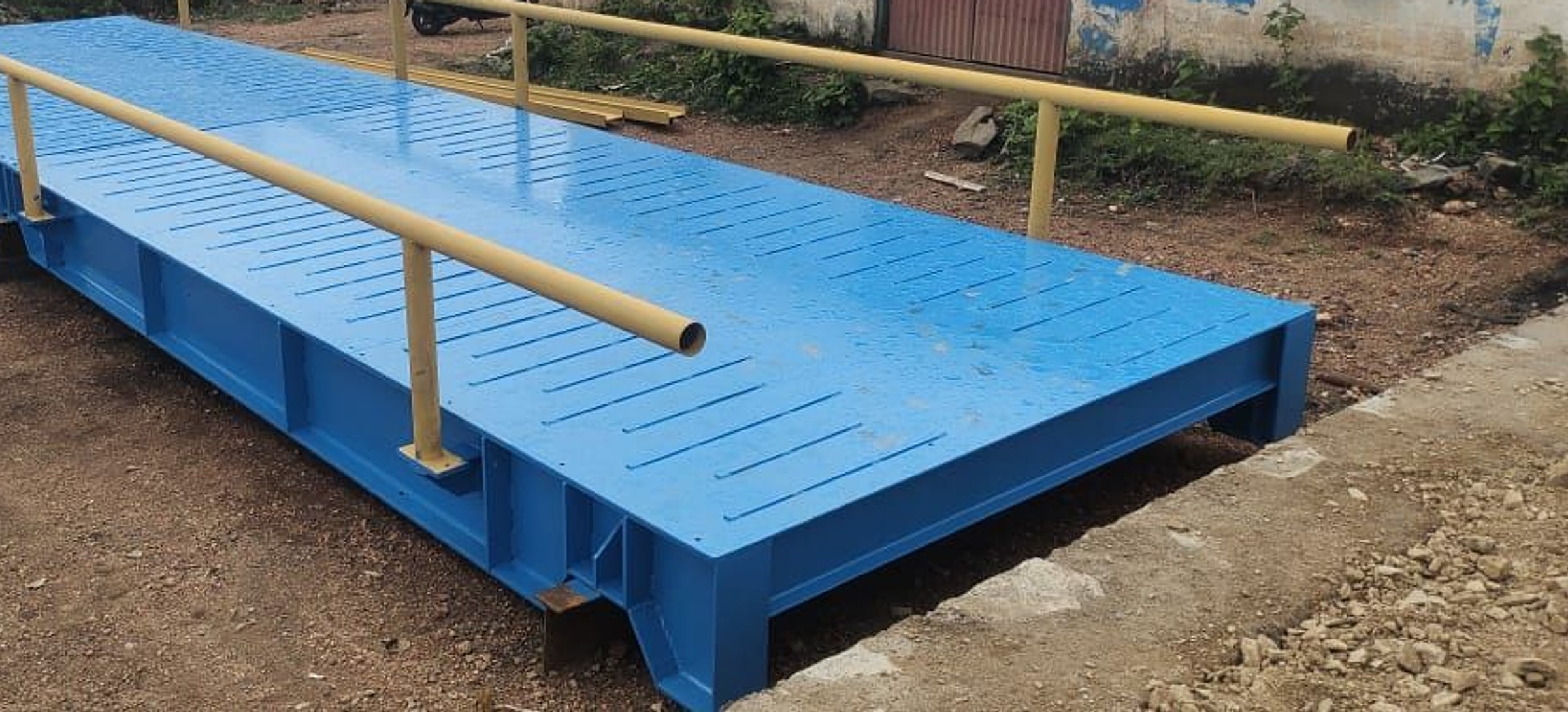
Parbhani weighbridges for gin yards, cane and grain.
Parbhani, in the heart of Marathwada, is a cotton, soybean and jowar district. Cotton is bought at the Parbhani, Selu, Manwat and Jintur market yards and ginned and pressed through the winter, soybean and tur follow the kharif harvest into the APMC yards, and cane is crushed in season by sugar factories in the district, including in Gangakhed taluka. Purna is a railway junction, and the Vasantrao Naik Marathwada Agricultural University is based in Parbhani. Symphony supplies weighbridges, truck scales and dharam kanta (धर्म कांटा / tol kanta) across Parbhani district.
A Parbhani cotton ginning and pressing factory usually needs a 40–60 MT, 12–16 m pit-less steel weighbridge stamped for trade; a sugar factory cane yard 60–100 MT on 16–18 m, often with a second weighbridge for the crushing season; an APMC trader, dal mill or warehouse 40–60 MT on 12–16 m; a public weighbridge 60–100 MT on 16–18 m (dharam kanta). Symphony builds it in Ahmedabad and dispatches it about 2 weeks after a commercially cleared order with PO.
Kapas, soybean and cane: a weighing season for each crop.
- Soybean, kapas, caneOne district, three weighing seasons.
- Selu and Manwat gin yardsTrolleys in, bale trucks out, one stamped slip.
- Black cotton soilFoundation drawing, raised approach, drainage.
Who needs one in Parbhani: Cotton ginning and pressing factories and cotton traders in Parbhani, Selu, Manwat and Jintur; soybean, tur, gram and jowar traders and commission agents at the APMC yards; sugar factories and cane contractors, including in Gangakhed taluka; dal mills, oil mills and warehouses; units in the Parbhani MIDC area; transporters, sand and stone suppliers and public dharam kanta operators.
Also called a dharam kanta (धर्म कांटा), truck scale or weigh bridge. We also serve Gangakhed, Selu, Jintur, Purna, Pathri, Manwat, Sonpeth, Palam.
Ginners, cane yards and dal mills across Parbhani district.
Cotton ginning and pressing
Farmers' kapas is paid for by weight at the gin gate, and bales and seed leave in trucks, so the same weighbridge settles both sides of the business.
Our setup: A 40–60 MT, 12–16 m stamped pit-less steel weighbridge with SMFW slips by farmer and lot.
Sugar factory cane yard
Growers are paid on the weight of each double trolley, and the gate runs day and night for the whole crushing season.
Our setup: Two 60–100 MT, 16–18 m stamped weighbridges, pit-less steel or RCC, with SMFW grower records.
Dal mills and warehouses
Tur and gram come in by the trolley and the truck, and stock stored against weight receipts must reconcile at the end of the season.
Our setup: A 40–60 MT, 12–16 m pit-less steel weighbridge with SMFW reports by party, lot and material.
- Parbhani APMCcotton, soybean, tur and jowar
- Parbhani MIDCagro-processing and small engineering units
- Selu, Manwat and Jintur market yardscotton ginning, pressing and trade
- Gangakhed talukasugar and cane transport
- Purnarailway junction, grain and goods traffic
Gin trolleys, bale trucks and black soil: sizing a Parbhani weighbridge.
Parbhani's weighing year follows its crops. Soybean comes first after the kharif harvest, cotton fills the gin yards of Selu, Manwat and Jintur from the winter onwards, and the cane season keeps factory gates busy for months. A gin yard buys loose kapas from tractor-trolleys and sends out bales and cotton seed in loaded trucks, so one weighbridge has to handle both: 12–16 m and 40–60 MT stamped for trade is the usual fit, and 16 m if multi-axle trucks also load at the yard. A cane yard weighs long double trolleys and trucks in and out all day and night, so 16–18 m with a 60–100 MT capacity is safer, and many factories add a second weighbridge so the queue never holds up crushing. A dal mill or warehouse that stores grain against weight receipts needs clean SMFW records by party, lot and vehicle. The district sits on deep black cotton soil that swells in the monsoon and cracks in summer, so build exactly to the foundation drawing, raise the approaches and give the pit-less gap a way to drain. Cotton lint and dust settle under the platform: keep an open gap that can be swept, and use sealed IP67/IP68 load cells. Plan the stamping and yearly re-verification before October, when the first soybean and kapas arrive.
| Recommended for | Vehicles | Capacity | Weighbridge | Type |
|---|---|---|---|---|
| Cotton ginning and pressing factory | Tractor-trolleys, trucks | 40–60 MT | 12–16 m | Pit-less steel, stamped |
| Sugar factory cane yard | Double trolleys, trucks | 60–100 MT | 16–18 m | Pit-less steel or RCC, stamped |
| APMC trader, dal mill or warehouse | Trolleys, 10-wheel trucks | 40–60 MT | 12–16 m | Pit-less steel, stamped |
| Public weighbridge | Trolleys to multi-axle trucks | 60–100 MT | 16–18 m | Pit-less steel or RCC, stamped |
Starting points only. Send your heaviest truck and daily traffic and we confirm the size.
From the Selu gin gate to the stamped slip: six steps in Parbhani.
Six steps for your project in Parbhani. Most of the waiting is the foundation curing, so the drawing comes first.
- 1 · Your traffic in ParbhaniTell us the heaviest vehicle you weigh (here, typically tractor-trolleys, trucks), the space at the gate and the daily count. An engineer replies within one working day.
- 2 · Size and quotationOur usual starting point (cotton ginning and pressing factory): 40–60 MT, 12–16 m weighbridge, Pit-less steel, stamped. The quotation comes with the foundation drawing.
- 3 · Foundation on siteYour civil contractor builds the concrete pedestals to our drawing; we can check the levels before the weighbridge arrives.
- 4 · Fabrication and dispatchBuilt and tested in our Ahmedabad workshop; dispatch in about 2 weeks from a commercially cleared order with PO, then delivered and placed on your foundation.
- 5 · Installation and calibrationWeighbridge placed, load cells and indicator connected and calibrated, slip printing set up, and Legal Metrology verification supported.
- 6 · AMC and serviceAMC, breakdown visits, calibration and annual re-verification support from our technical desk, so the weighbridge stays accurate for years.
Questions from Parbhani's ginners, millers and traders.
Who supplies weighbridges in Parbhani?
Which weighbridge suits a cotton ginning factory in Selu or Manwat?
Does a sugar factory cane yard in Gangakhed taluka need two weighbridges?
How long does a Parbhani weighbridge take to arrive?
What decides the cost of a weighbridge in Parbhani?
परभणी में कपास जिनिंग इकाई के लिए धर्म कांटा स्थापित करने से पहले क्या देखें?
Tell us your site. We recommend the platform.
Send a site photo, vehicle size and daily vehicle count. An engineer replies within one working day.