
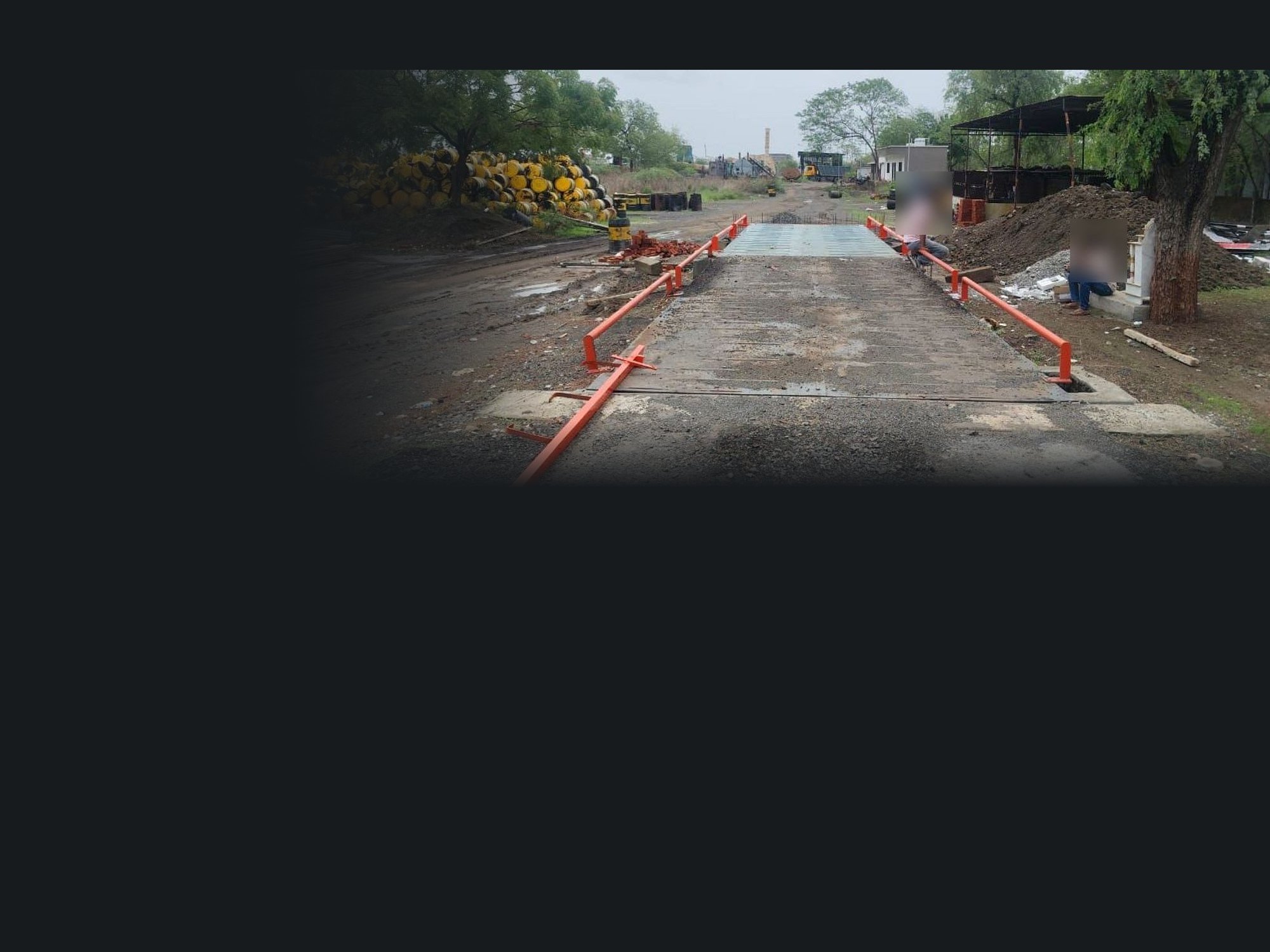
Waluj weighbridges for foundries, plastics units and steel yards.
Waluj is the metal-and-plastics side of Chhatrapati Sambhajinagar (Aurangabad). Its MIDC estate in Gangapur taluka holds foundries, die-casting and machining shops, plastics and rubber units, steel stockists, chemical and packaging makers, and transport yards that serve the region. Ingots, granules, scrap and drums arrive and leave by weight, so the weighbridge at the gate is where the plant, the supplier and the transporter agree on a number. Symphony supplies weighbridges, truck scales and dharam kanta, tol kanta or vajan kata (धर्म कांटा / तौल कांटा / वजन काटा) to Waluj and its estate neighbours.
A Waluj foundry or die-casting unit usually fits a 40–60 MT, 14–16 m weighbridge for ingot, scrap and casting loads; a steel stockist or scrap dealer should look at 60–80 MT on 16 m in heavy steel or concrete (RCC); a plastics or polymer-granule unit fits 40–60 MT on 12–14 m with party-wise reports; a transport yard serving the estate takes 80–100 MT on 18 m; and a small workshop on leased land can take a modular platform. Steelwork is fabricated at our Ahmedabad works so your civil team can prepare the base in parallel.
Ingot in, castings and scrap out: a slip that shows the melt loss.
- Melt loss on paperA slip for every ingot and scrap load lets a foundry read its loss between purchase and dispatch.
- Heavy builds for bar and coilA heavier steel or RCC platform carries long trailers that load a small part of the platform.
- Dust-ready cellsSealed IP68/IP69K load cells are built for dusty yards.
Who needs one in Waluj: Foundries, aluminium and zinc die-casting units, machining and fabrication shops; plastics, polymer-granule and rubber units; steel stockists, re-rollers and scrap dealers; chemical, paint and drum-based units; packaging and corrugated-carton makers; transport companies and logistics yards; building-material suppliers; and public weighing operators.
Also called a dharam kanta (धर्म कांटा), truck scale or weigh bridge. We also serve Gangapur, Bajajnagar, Jogeshwari.
Foundries, polymer units and steel stockists across the Waluj estate.
Foundries and die-casting units
Melt loss is the number the owner watches, and it can be read only if every ingot and scrap load is on paper.
Our setup: Suggested build: 40–60 MT on 14–16 m, fresh tare per trip, SMFW slips.
Plastics and polymer units
Granules arrive by the tonne and rejected parts go out for resale, so the same truck carries different material.
Our setup: Our fit: 40–60 MT on 12–14 m with party-wise reports.
Steel stockists and scrap dealers
Long bar and coil trailers put heavy concentrated loads onto a small part of the platform.
Our setup: For this trade we suggest 60–80 MT on 16 m, heavy steel or concrete (RCC).
- Waluj MIDCfoundries, die-casting, plastics, rubber and engineering units
- Waluj steel and scrap yardsbars, coils, scrap and metal trading
- Bajajnagar and Jogeshwarimachine shops, fabricators and component suppliers
- Estate roads around the MIDCtransport companies, packaging units and warehouses
Black cotton soil, iron dust and queues: where a Waluj weighbridge should stand.
Waluj weighing is a trade of metal and polymer. A foundry buys ingot and scrap by the tonne and sells castings by weight, and the melt loss between the two is something the owner watches closely; a slip for every load in and out is the only way to read that loss with any confidence. Die-casting and plastics units bring in granules and alloy in bags and bundles, and send dross, runners and rejected parts back for resale, so the same truck can carry different materials on different days and each needs a fresh tare. Steel stockists and re-rollers move long bars and coils on trailers that push a heavy load onto a small part of the platform, which is why a heavier steel or concrete build is worth the cost. Ground across much of the Marathwada plateau is black cotton soil over basalt, so we confirm the soil on your plot first; that soil swells in the monsoon and cracks in the dry months; our foundation drawing sets the pedestal depth after a soil check, usually taking it to firm strata or murum with compacted approaches so the platform keeps its level. Iron dust, fine ash and plastic fluff settle on everything, so choose sealed IP68/IP69K load cells and keep the junction area clear. Where trucks queue on the estate road, a long platform of 16 to 18 m and a clear stopping line save time for every vehicle behind. Leased sheds can take the modular weighbridge, which installs within hours on hard, level concrete and moves with the tenant.
| Recommended for | Vehicles | Capacity | Weighbridge | Type |
|---|---|---|---|---|
| Foundry or die-casting unit | Ingot and scrap in, castings and dross out | 40–60 MT | 14–16 m | Pit-less steel, fresh tare per trip, SMFW slips |
| Steel stockist or re-roller | Long bar and coil trailers | 60–80 MT | 16 m | Heavy steel or RCC built for concentrated loads |
| Plastics, polymer or rubber unit | Granules and bagged material in, products out | 40–60 MT | 12–14 m | Steel build, party-wise reports |
| Chemical, paint or drum-based unit | Drum trucks and tankers | 40–60 MT | 12–14 m | Sealed IP68/IP69K cells, wash-down friendly |
| Transport or logistics yard | Multi-axle trucks and container trailers | 80–100 MT | 18 m | Heavy RCC or steel, boom barrier and RFID if wanted |
| Workshop on leased land | Mixed trucks on rented plots | 40–60 MT | 12–16 m | Modular platform that moves with the lease |
Starting points only. Send your heaviest truck and daily traffic and we confirm the size.
From the soil check to the first printed slip: a Waluj weighbridge in six steps.
Six steps for your project in Waluj. Most of the waiting is the foundation curing, so the drawing comes first.
- 1 · Your traffic in WalujTell us the heaviest vehicle you weigh (here, typically ingot and scrap in, castings and dross out), the space at the gate and the daily count. An engineer replies within one working day.
- 2 · Size and quotationOur usual starting point (foundry or die-casting unit): 40–60 MT, 14–16 m weighbridge, Pit-less steel, fresh tare per trip, SMFW slips. The quotation comes with the foundation drawing.
- 3 · Foundation on siteYour civil contractor builds the concrete pedestals to our drawing; we can check the levels before the weighbridge arrives.
- 4 · Fabrication and dispatchBuilt and tested in our Ahmedabad workshop; dispatch in about 2 weeks from a commercially cleared order with PO, then delivered and placed on your foundation.
- 5 · Installation and calibrationWeighbridge placed, load cells and indicator connected and calibrated, SMFW stored tares set up (RFID, cameras and boom barrier where ordered), and Legal Metrology verification supported.
- 6 · AMC and serviceAMC, breakdown visits, calibration and annual re-verification support from our technical desk, so the weighbridge stays accurate for years.
What Waluj foundry owners, stockists and transporters ask first.
Who supplies weighbridges in Waluj?
What size of weighbridge suits a Waluj foundry?
Why does tare matter so much in a metal unit?
Does black cotton soil affect the foundation?
Our Waluj workshop is on a leased plot. What are the options?
What is the timeline for a Waluj order?
How can a foundry read its melt loss from the weighbridge?
Do iron dust and plastic fluff damage load cells?
What decides the cost of a weighbridge in Waluj?
वालूज में फाउंड्री या स्टील इकाई के लिए तौल कांटा कैसे चुनें?
Tell us your site. We recommend the platform.
Send a site photo, vehicle size and daily vehicle count. An engineer replies within one working day.