
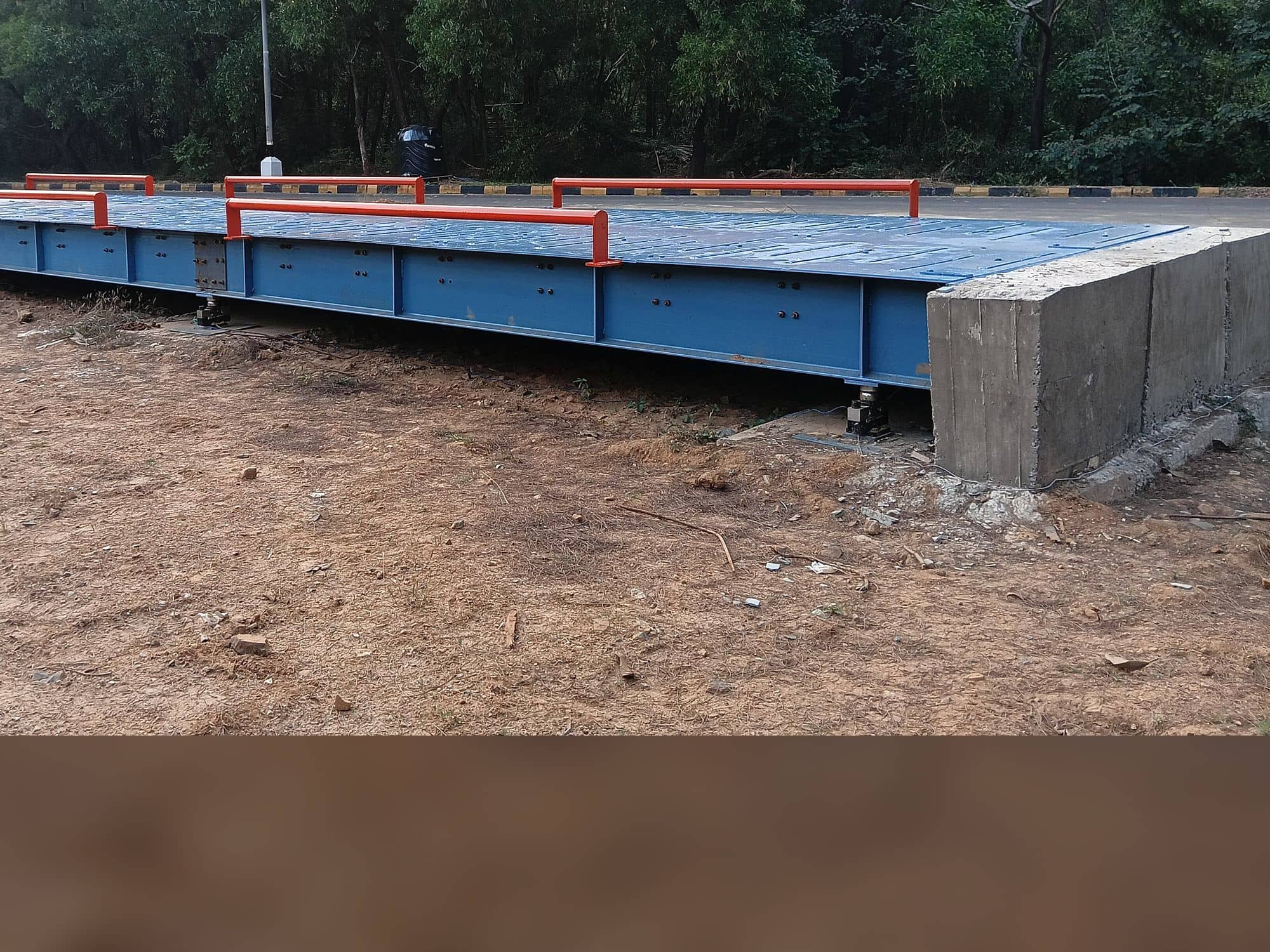
Barwani weighbridges for cotton, papaya and bananas.
Barwani lies on the south bank of the Narmada, with the Satpura hills behind it, in the Nimar cotton belt. The town is known for its papaya and bananas, grown on the river plain and sent by truck to markets in other states, while Sendhwa, on the Agra–Mumbai road, is one of Madhya Pradesh's well-known cotton ginning and trading centres. Anjad, Rajpur and Khetia trade cotton, maize, wheat and pulses, and the Jain hill shrine of Bawangaja draws pilgrims through the year. Symphony supplies weighbridges, truck scales and dharam kanta (धर्म कांटा / tol kanta) across Barwani district.
A Barwani-district cotton ginning unit usually needs a stamped 60 MT, 16–18 m weighbridge; a papaya or banana trader 40 MT on 12–16 m; a grain trader at the mandi 40–60 MT on 12–16 m; a public weighbridge on the highway at Sendhwa 80–100 MT on 18 m (dharam kanta). Symphony builds it in Ahmedabad and dispatches it about 2 weeks after a commercially cleared order with PO.
A verified slip for every farmer at the ginning gate.
- Stamped for kapas buyingA clear, verified slip for every farmer's load at the ginning gate.
- Length for bales and fruit16–18 m for long bale trucks and light, bulky fruit loads.
- Shade, UPS and sealed cellsReady for the hot summer, cotton dust and monsoon black soil.
Who needs one in Barwani: Cotton ginning and pressing units at Sendhwa, Anjad and Khetia; cotton and kapas traders; papaya and banana traders and loaders; maize, wheat and pulse traders at the krishi upaj mandis; cotton-seed oil and cake units; stone crushers and building-material suppliers; transporters and public dharam kanta operators on the highway.
Also called a dharam kanta (धर्म कांटा), truck scale or weigh bridge. We also serve Sendhwa, Anjad, Rajpur, Khetia, Pansemal.
Ginners, fruit traders and transporters across Barwani district.
Cotton ginning units
Each farmer's kapas is bought on the weighed figure, and the season brings long queues at the gate.
Our setup: A stamped 60 MT, 16–18 m weighbridge with a closed cabin, sealed load cells and SMFW slips per farmer.
Papaya and banana traders
Fruit is perishable, so trucks must be weighed and sent off quickly, and buyers in other states pay on the slip.
Our setup: A stamped 40 MT, 12–16 m pit-less weighbridge with a fast printer and SMFW records.
Highway public weighbridge
Transit trucks and trailers need a quick, trusted slip at any hour.
Our setup: An 80–100 MT, 18 m weighbridge in concrete (RCC) or pit-less steel, with SMFW and the unmanned option (RFID, cameras, boom barrier).
- Sendhwacotton ginning, pressing and cotton trade
- Anjadcotton ginning and farm-produce trade
- Khetiacotton and grain trade
Cotton dust, perishable fruit and summer heat: what a Barwani weighbridge has to handle.
Cotton decides the weighbridge in this district. Kapas comes to the ginning units in loose, high loads on tractor-trolleys and trucks, and the farmer is paid on the weight, so the weighbridge must be stamped and the slip must be clear. Bales leave in long trucks; a 16–18 m platform takes the whole vehicle in one weighing. Cotton fluff and dust get everywhere in the ginning season, so keep the indicator in a closed cabin and use IP67/IP68 load cells with a sealed junction box. Papaya and bananas are perishable and light for their volume: weigh fast, print the slip and load, and size the weighbridge by the length of the trucks, not by tonnage. Summers in Nimar are very hot, and the black soil of the river plain swells in the monsoon: give the indicator shade and a UPS, take the foundation down to firm strata or a well-compacted base as the drawing specifies, and keep side drains open before the rains.
| Recommended for | Vehicles | Capacity | Weighbridge | Type |
|---|---|---|---|---|
| Cotton ginning and pressing unit | Kapas trolleys and trucks, bale trucks | 60 MT | 16–18 m | Pit-less steel or concrete (RCC), stamped, closed cabin |
| Papaya and banana trader | Trucks, pickups | 40 MT | 12–16 m | Pit-less steel, stamped for trade |
| Maize, wheat and pulse trader | Trucks, tractor-trolleys | 40–60 MT | 12–16 m | Pit-type or pit-less, stamped |
| Public weighbridge on the highway | Trailers and multi-axle trucks | 80–100 MT | 18 m | Concrete (RCC) or pit-less steel, printed slip, SMFW |
Starting points only. Send your heaviest truck and daily traffic and we confirm the size.
From the ginning yard to verified weighing: six steps in Barwani.
Six steps for your project in Barwani. Most of the waiting is the foundation curing, so the drawing comes first.
- 1 · Your traffic in BarwaniTell us the heaviest vehicle you weigh (here, typically kapas trolleys and trucks, bale trucks), the space at the gate and the daily count. An engineer replies within one working day.
- 2 · Size and quotationOur usual starting point (cotton ginning and pressing unit): 60 MT, 16–18 m weighbridge, Pit-less steel or concrete (RCC), stamped, closed cabin. The quotation comes with the foundation drawing.
- 3 · Foundation on siteYour civil contractor builds it to our drawing; a pit-type weighbridge needs a drained pit with a sump. We can check the levels before the weighbridge arrives.
- 4 · Fabrication and dispatchBuilt and tested in our Ahmedabad workshop; dispatch in about 2 weeks from a commercially cleared order with PO, then delivered and placed on your foundation.
- 5 · Installation and calibrationWeighbridge placed, load cells and indicator connected and calibrated, slip printing set up, and Legal Metrology verification supported.
- 6 · AMC and serviceAMC, breakdown visits, calibration and annual re-verification support from our technical desk, so the weighbridge stays accurate for years.
Questions from Barwani's ginners, fruit traders and transporters.
Who supplies weighbridges in Barwani?
Which weighbridge suits a cotton ginning unit in Sendhwa or Anjad?
Which truck scale suits a papaya or banana trader in Barwani?
बड़वानी में कपास जिनिंग इकाई के लिए कौन सा धर्म कांटा उपयुक्त है?
What decides the cost of a weighbridge in Barwani?
बड़वानी में पपीता व्यापारी के लिए धर्म कांटा चुनते समय क्या ध्यान रखें?
Tell us your site. We recommend the platform.
Send a site photo, vehicle size and daily vehicle count. An engineer replies within one working day.