
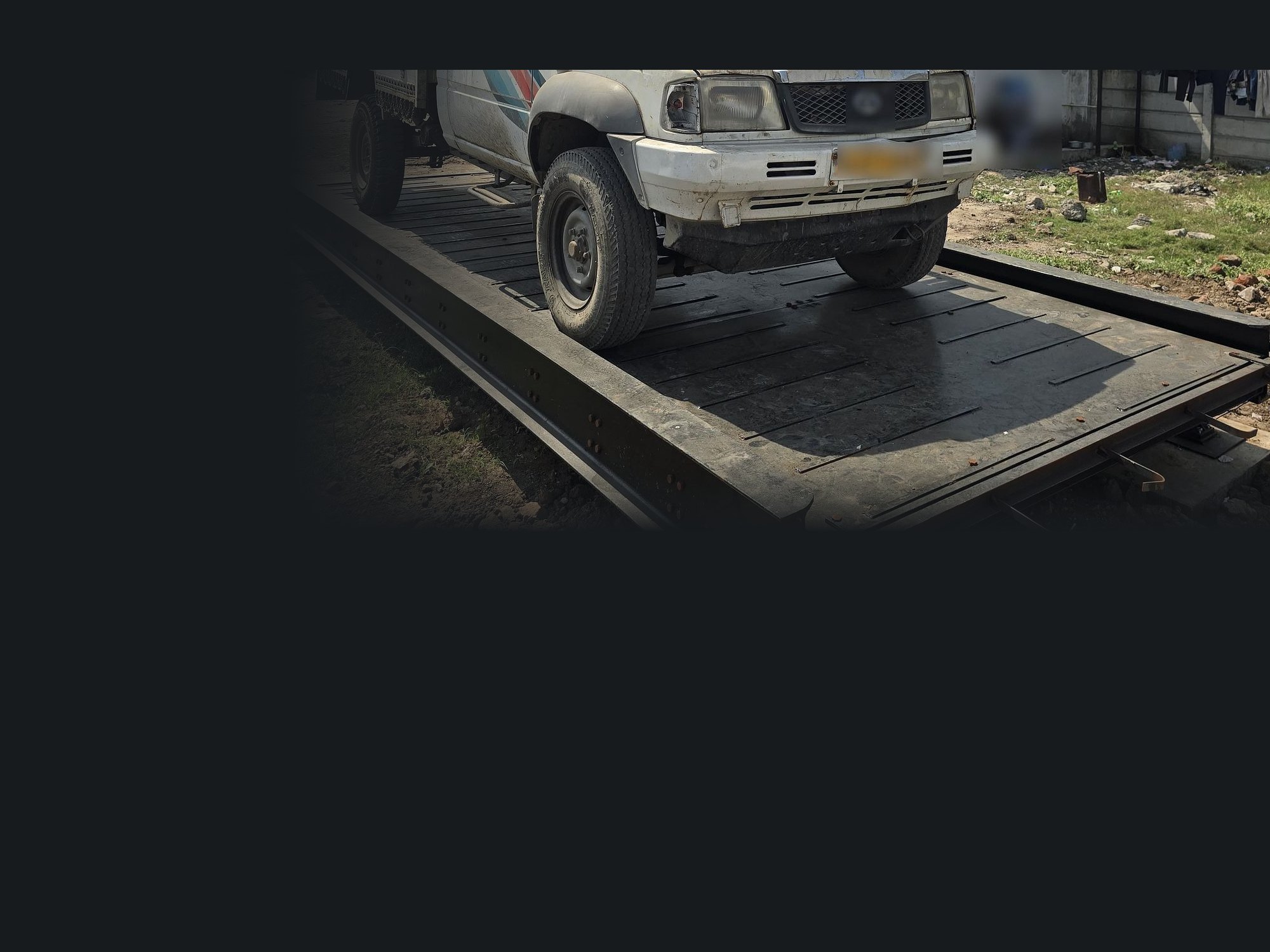
Maihar weighbridges for the cement belt, crushers and the mandi.
Maihar, the temple town below the Trikut hill where the Katni–Satna rail line runs along the Vindhyan scarp, became a district of its own in 2023, carved out of Satna, and lives on cement and grain. The limestone of the Vindhyan belt feeds the large cement plants in and around Maihar and Sarlanagar, whose captive mines send stone by the dense tipper and whose clinker and cement leave by the rail siding, the bulker and the truck; stone crushers and grit suppliers cut the same rock for the road and building trade; the Udyog Dham industrial area holds fly-ash brick, engineering and processing units; the Krishi Upaj Mandis at Maihar and Amarpatan and the grain yards at Ramnagar trade wheat, gram, paddy, lentil and mustard from the Tons valley; flour and dal mills work the grain; and the pilgrims of the Sharda Devi temple keep a fleet of buses and transporters busy through the year. Symphony supplies weighbridges, truck scales and dharam kanta (धर्म कांटा / tol kanta) across Maihar district.
A limestone mine contractor, a crusher or a clinker transporter at Maihar or Sarlanagar takes a 100 MT weighbridge on 18 m, pit-less steel or concrete (RCC), stamped for trade, built for the axle load of a dense limestone tipper or a loaded clinker bulker, with sealed IP67/IP68 load cells against cement and lime dust and the unmanned option (RFID, cameras, boom barrier) where the gate runs three shifts; a fly-ash brick or engineering unit in the Udyog Dham industrial area 60 MT on 16 m; a mandi commission agent or a flour mill at Maihar, Amarpatan or Ramnagar 40–60 MT on 12–16 m; a rice mill in the Amarpatan belt 60 MT on 16 m; a public weighbridge on the Satna or Katni road 60–100 MT on 16–18 m (dharam kanta). Symphony builds it in Ahmedabad and dispatches it about 2 weeks after a commercially cleared order with PO.
Cement dust, dense limestone and a bulker every few minutes: why a Maihar weighbridge is built heavier.
- Limestone tippers at the axle limit, clinker bulkers, cement dust on everything100 MT on 18 m, an RCC top for the dust, sealed IP67/IP68 load cells, potted junction box.
- Rock close under the soil at Maihar, Tons-valley loam at Amarpatan, the middle forties in May and a metre of rainShallow pedestals on the limestone, deeper ones in the loam; a raised pit-less platform rather than a pit cut in rock.
- Wheat and gram by the trolley in March, paddy in October, bricks by the truck all year40–60 MT on 12–16 m for the mandi, 60 MT on 16 m for the brick plant, SMFW reports by party and lot.
Who needs one in Maihar: Cement plants of Maihar and Sarlanagar and their captive limestone mines; clinker, cement and fly-ash transporters and bulker operators; limestone and sandstone quarries, stone crushers and grit suppliers; fly-ash brick, engineering, fabrication and processing units in the Udyog Dham industrial area; wheat, gram, paddy, lentil and mustard traders and commission agents at the Maihar and Amarpatan mandis and the Ramnagar yards; flour mills, dal mills and oil expellers; rice mills of the Amarpatan–Ramnagar paddy belt; coal and other raw-material transporters serving the plants; contractors on the Satna, Katni and Rewa roads; warehouses, cold storages and transporters at Maihar station and on the Katni road; dairy and cattle-feed units; public dharam kanta operators.
Also called a dharam kanta (धर्म कांटा), truck scale or weigh bridge. We also serve Amarpatan, Ramnagar, Sarlanagar, Udyog Dham.
Crushers, transporters, brick plants and mandi traders across Maihar district.
Cement-belt transporters and crushers
Limestone comes off the captive mines by the dense tipper, clinker leaves for the grinding units by the bulker and the trailer, cement goes out by the bag and the bulker, and a transporter paid by the tonne needs a slip the plant and the consignee both accept, on a platform that is coated in alkaline dust by noon.
Our setup: A 100 MT, 18 m weighbridge in pit-less steel or RCC, built for the axle load, with IP67/IP68 sealed load cells, a potted junction box, a stored tare for every regular bulker in SMFW and the unmanned option for a yard that runs three shifts.
Fly-ash brick plants
Ash comes in from the power stations by the bulker, sand and lime by the tipper, and bricks go out by the 10-wheeler to builders across the Vindhyan districts, so the plant weighs three materials in and one product out every day.
Our setup: A 60 MT, 16 m pit-less steel weighbridge, stamped, with SMFW reports by party and material, a remote display at the loading bay and a drained apron, on shallow pedestals where the rock lies close under the soil.
Mandi traders and flour mills
Wheat, gram, lentil and mustard reach the Maihar and Amarpatan mandis by the tractor-trolley and the small truck from March and the paddy of the Ramnagar belt from October, and a commission agent settles each trolley against the farmer's slip the same day.
Our setup: A 40–60 MT, 12–16 m pit-less steel weighbridge, stamped, with SMFW slips by farmer, lot and commodity and a stored tare for each regular tractor; a rice or flour mill adds grain-in and product-out reports on a 60 MT, 16 m platform.
- Maihar town, the station and the temple roadthe Krishi Upaj Mandi, flour and dal mills, transporters, warehouses, bus and taxi operators
- Sarlanagar and the cement beltcement plants, captive limestone mines, clinker and cement sidings, bulker operators
- Udyog Dham industrial areafly-ash brick, engineering, fabrication and processing units
- Amarpatanthe Krishi Upaj Mandi, rice and flour mills, oil expellers, the Rewa road
- Ramnagargrain yards, paddy and wheat traders, dal mills, the Tons valley farms
- The Katni road out of Maiharstone crushers, grit suppliers, transporters, warehouses
Vindhyan rock under Maihar, Tons-valley loam at Amarpatan: founding a weighbridge in the newest district of the Vindhyas.
Cement country asks three things of a weighbridge: that it carry dense loads all day, that it survive the dust, and that it sit on rock without a costly excavation. Around Maihar and Sarlanagar the Vindhyan limestone lies close under a thin red soil, so a pit cut into it is slow and expensive and most buyers choose a raised pit-less platform on shallow pedestals seated directly on the rock, with a sloped apron that sheds the monsoon run-off; on the Tons-valley plain at Amarpatan and Ramnagar the ground is a deeper loam that turns to black clay in the lower fields, and there the pedestals go below the layer that moves between the wet season and May. The district takes about a metre of rain between June and September and bakes at forty-five degrees in May, so the load cells are IP67/IP68 sealed, the junction box is potted on site and the cable runs in closed conduit. The loads come from the plants. The captive mines send limestone to the kilns by the dense tipper, and limestone is heavy enough that a tipper is at its axle limit with the body barely half loaded, so a mine contractor, a crusher or a transporter takes 100 MT on 18 m, sized for the axle, not the gross; clinker goes out to the grinding units by the bulker and the multi-axle trailer and cement by the bag on the 10-wheeler and the bulker, and the same 18 m platform takes them all with SMFW stored tares for every regular bulker, so the tare is not re-weighed on each trip. Cement and lime dust are alkaline, draw moisture and eat ordinary paint, so a platform that is swept of dust every day is better as concrete (RCC), which carries a 25-year structural warranty; the plants weigh on their own instruments at the gate, and Symphony's place is the transporters' yards, the crushers, the grit suppliers, the fly-ash brick plants and the contractors who settle by the tonne. The Udyog Dham industrial area takes fly ash in by the bulker and sends bricks out by the truck, which is 60 MT on 16 m with SMFW reports by party and material; the stone crushers on the Katni and Satna roads load tippers wet and heavy in the rains and take 60–100 MT on 16–18 m in RCC; and the transporters at Maihar station and on the Katni road weigh everything from a trolley to a 40-foot trailer, which is 100 MT on 18 m. The grain sets the other size. Wheat, gram, lentil and mustard come to the Maihar and Amarpatan mandis by the tractor-trolley and the small truck from March, and the paddy of the Amarpatan–Ramnagar belt from October, so a commission agent or a flour mill takes 40–60 MT on 12–16 m and a rice mill 60 MT on 16 m, with paddy-in and rice-out as separate reports. In the Navratri fairs the Sharda Devi temple brings buses and pilgrims by the lakh, and the roads around the town are given over to them; a buyer who wants the weighbridge working before the autumn fair plans the civil work for the dry months. Once the platform is installed it is calibrated with test weights and presented to Legal Metrology with Symphony's stamping support; a Maihar mandi trader or flour mill should plan that for February, so the stamp is on the platform before the first wheat trolleys of the rabi season arrive in March.
| Recommended for | Vehicles | Capacity | Weighbridge | Type |
|---|---|---|---|---|
| Limestone mine contractor or crusher, Maihar or Sarlanagar | Loaded limestone tippers | 100 MT | 18 m | Pit-less steel or RCC, stamped, unmanned option |
| Clinker, cement or fly-ash transporter, the plant roads and the Katni road | Bulkers, multi-axle trailers | 100 MT | 18 m | Pit-less steel or RCC, stamped |
| Fly-ash brick, engineering or processing unit, Udyog Dham industrial area | Ash bulkers, brick trucks | 60 MT | 16 m | Pit-less steel, stamped |
| Mandi commission agent or flour mill, Maihar, Amarpatan or Ramnagar | Tractor-trolleys, 10-wheel trucks | 40–60 MT | 12–16 m | Pit-less steel, stamped |
| Rice mill, the Amarpatan–Ramnagar paddy belt | Paddy trolleys, rice trucks | 60 MT | 16 m | Pit-less steel, stamped |
| Public weighbridge, Satna, Katni or Rewa road | Trolleys to 40-foot trailers | 60–100 MT | 16–18 m | Pit-less steel or RCC, stamped |
Starting points only. Send your heaviest truck and daily traffic and we confirm the size.
From the crusher-yard survey on the Katni road to the first stamped tipper: how a Maihar order runs.
Six steps for your project in Maihar. Most of the waiting is the foundation curing, so the drawing comes first.
- 1 · Your traffic in MaiharTell us the heaviest vehicle you weigh (here, typically loaded limestone tippers), the space at the gate and the daily count. An engineer replies within one working day.
- 2 · Size and quotationOur usual starting point (limestone mine contractor or crusher, Maihar or Sarlanagar): 100 MT, 18 m weighbridge, Pit-less steel or RCC, stamped, unmanned option. The quotation comes with the foundation drawing.
- 3 · Foundation on siteYour civil contractor builds the concrete pedestals to our drawing; we can check the levels before the weighbridge arrives.
- 4 · Fabrication and dispatchBuilt and tested in our Ahmedabad workshop; dispatch in about 2 weeks from a commercially cleared order with PO, then delivered and placed on your foundation.
- 5 · Installation and calibrationWeighbridge placed, load cells and indicator connected and calibrated, SMFW stored tares set up (RFID, cameras and boom barrier where ordered), and Legal Metrology verification supported.
- 6 · AMC and serviceAMC, breakdown visits, calibration and annual re-verification support from our technical desk, so the weighbridge stays accurate for years.
Maihar's transporters, brick makers and grain traders: what they ask before ordering.
Who supplies weighbridges in Maihar?
Which weighbridge suits a limestone mine contractor, a crusher or a clinker transporter in Maihar?
Which weighbridge suits a mandi trader or a flour mill at Maihar, Amarpatan or Ramnagar?
How long does a Maihar weighbridge take to arrive?
What decides the cost of a weighbridge in Maihar?
मैहर में सीमेंट परिवहन, क्रशर या मंडी व्यवसाय के लिए धर्म कांटा कैसे स्थापित करें?
Tell us your site. We recommend the platform.
Send a site photo, vehicle size and daily vehicle count. An engineer replies within one working day.