
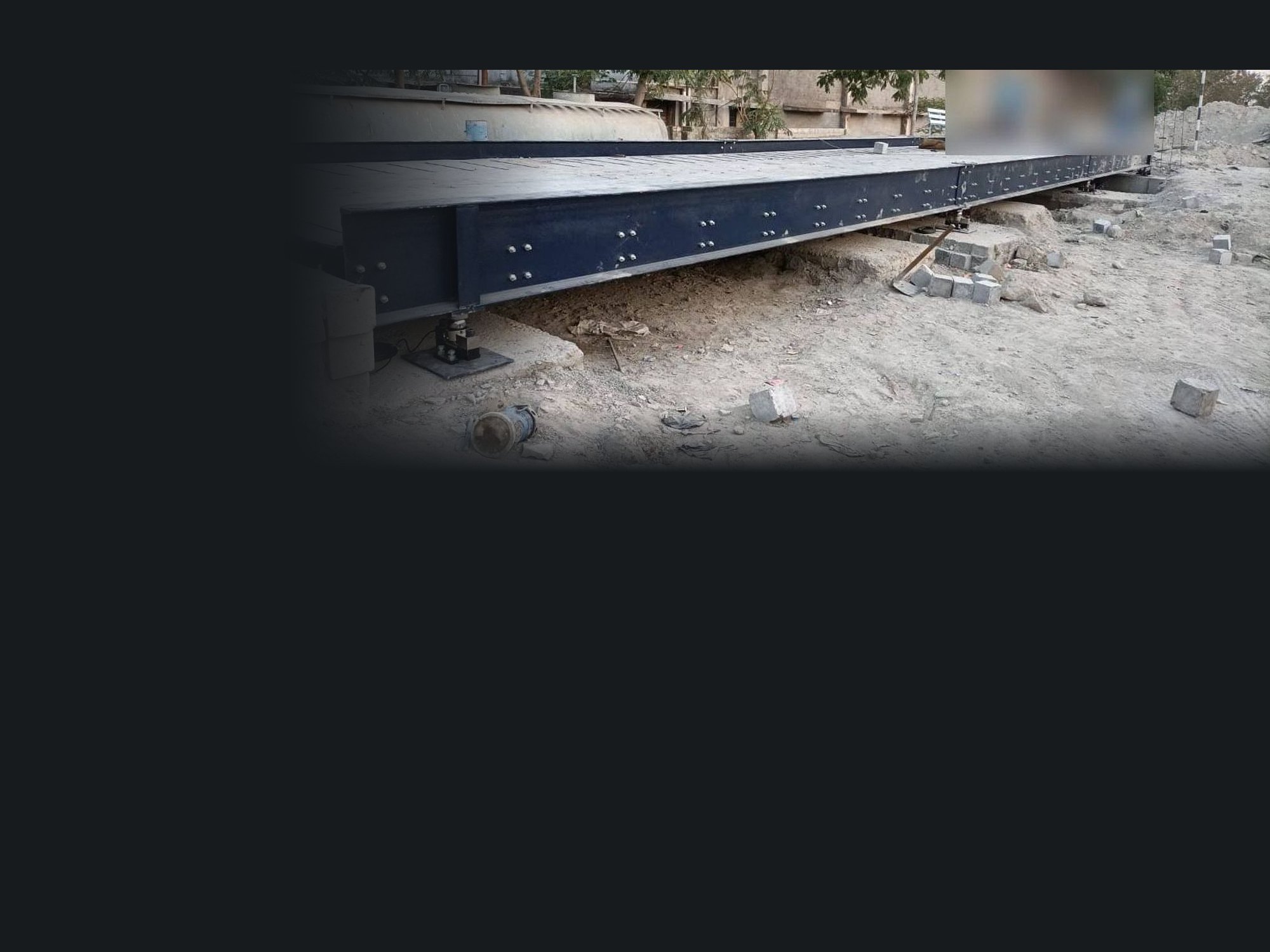
Rewa weighbridges for rice mills, quarries and bulker yards.
Rewa, once the seat of the Baghel rulers, sits on the Bichhiya and the Bihar where the Vindhyan scarp drops toward the Ganga plain, and it is the trading gate between Madhya Pradesh and Uttar Pradesh for rice, wheat, sandstone and cement. Paddy and wheat from the Rewa plateau and the Teonthar and Mangawan plains are sold in the Krishi Upaj Mandi yards and milled into rice and flour within the district; quarries and crushers along the scarp load sandstone as boulders, grit and building stone; trucks and bulkers carry cement, coal and fly ash on the Satna, Sidhi and Prayagraj roads; and contractors building roads, canals and solar parks keep tippers busy across the plateau. Symphony supplies weighbridges, truck scales and dharam kanta (धर्म कांटा / tol kanta) across Rewa district.
At Rewa, Teonthar, Mangawan or Raipur Karchuliyan a rice mill or paddy trader generally installs a 60 MT pit-less steel weighbridge 16 m long, stamped for trade, which takes a tractor with two trolleys in one weighing, and SMFW reports paddy in and rice, bran and husk out by vehicle and party. Mandi commission agents and flour or dal mills at Rewa, Sirmour or Gurh are well served by 40–60 MT on 12–16 m, enough for a wheat tractor-trolley or a loaded 10-wheel truck. Sandstone quarries and crushers on the Vindhyan scarp take 80–100 MT over 18 m with an RCC top. Transporters of cement, coal or fly ash and siding depots need 100 MT over 18 m in pit-less steel or concrete (RCC), long enough for a bulker or multi-axle trailer, with the unmanned option (RFID, cameras, boom barrier) where loading runs in three shifts. A public weighbridge (dharam kanta) on the Satna, Prayagraj or Sidhi road is typically 60–100 MT and 16–18 m. Rewa orders are built in Ahmedabad and leave about 2 weeks after a commercially cleared order with PO.
Two harvests of grain and trucks to Uttar Pradesh all year: why a Rewa weighbridge is built for both.
- Thousands of loads of paddy from October and wheat from March, mills that weigh both in and outA 16 m, 60 MT platform at the rice mill and a 12–16 m one at the mandi agent, with SMFW reports by lot, vehicle and party.
- Stone dropped at the crusher; bulkers and trailers heading into Uttar PradeshAt the crusher, 80–100 MT on 18 m with an RCC top; at the bulker yard, 100 MT on 18 m with sealed load cells.
- Sandstone close under the scarp, valley soil and standing water on the plainShort pedestals on the rock or deeper ones in the valley soil, and a pit-less platform lifted clear of monsoon water.
Who needs one in Rewa: Paddy traders and rice mills at Rewa, Teonthar, Mangawan and Raipur Karchuliyan; grain buyers and commission agents in the Krishi Upaj Mandis of Rewa, Teonthar, Sirmour, Mangawan and Gurh; soyabean traders, oil expellers, dal mills and flour mills; grit suppliers, stone crushers and sandstone quarries along the Vindhyan scarp; bulker operators and transporters of cement, coal and fly ash; brick kilns and building-material yards; contractors on road, canal and solar-park work; transporters at the Rewa station goods shed; fabrication and engineering workshops; cold stores, godowns and transporters on the Satna, Prayagraj, Sidhi and Shahdol roads; operators of public dharam kanta.
Also called a dharam kanta (धर्म कांटा), truck scale or weigh bridge. We also serve Teonthar, Sirmour, Raipur Karchuliyan, Mangawan, Gurh, Semariya.
Rice mills, quarries, bulker yards and mandi traders across Rewa district.
Rice mills, flour mills and mandi agents
From October paddy reaches the mandis and mills of Rewa, Teonthar and Mangawan on tractors with double trolleys, wheat and gram follow from March, and the mills buy mandi grain and send rice, bran, flour and dal out by truck.
Our setup: For the rice mill, 60 MT on 16 m in pit-less steel; for the flour mill and the agent, 40–60 MT on 12–16 m; each stamped for trade, SMFW showing grain in and product out lot by lot, and a stored tare for each regular tractor.
Quarry contractors and sandstone crushers
Building stone, grit and boulders leave the quarries and crushers of the Vindhyan scarp by tipper; a platform at a scarp quarry takes harder knocks than most, and a painted top soon gives way.
Our setup: 18 m and 80–100 MT with a concrete (RCC) top that stone does not wear through, sealed load cells, SMFW reports per vehicle and party, and a 25-year structural warranty on the RCC.
Transporters of cement, coal and fly ash
On the Satna, Sidhi and Prayagraj roads cement, coal and fly ash travel by truck and bulker, and a yard that loads through the night cannot hold its trucks until a clerk arrives.
Our setup: 100 MT over 18 m in pit-less steel or RCC with IP67/IP68 sealed load cells, a potted junction box, stored tares for each bulker, the unmanned option (RFID, cameras, boom barrier) and SMFW slips showing vehicle, party and challan.
- Rewa city and the Bichhiya bankthe Krishi Upaj Mandi, rice, flour and dal mills, the goods shed, workshops, building-material yards
- Teonthar and Mangawanpaddy and wheat plains, rice mills, the mandis
- Raipur Karchuliyan and Sirmourgrain mandis, rice mills, sandstone suppliers
- Gurhthe Gurh mandi, crushers, civil and solar-park contractors, tipper transporters
- The Vindhyan scarpsandstone quarries, crushers, grit suppliers, tipper operators
- The Satna, Prayagraj and Sidhi roadscement, coal and fly-ash transporters, bulker yards, godowns, public weighbridge operators
Sandstone on the scarp, river-valley soil below: siting a weighbridge in Rewa.
Two economies use Rewa's weighbridges, and they are busiest at different times of year. Grain comes in seasons: from October paddy reaches the mandis and the rice mills on tractors with double trolleys and on 10-wheel trucks, and from March wheat and gram follow, so a mill or a commission agent may weigh thousands of loads within a few weeks and needs a platform that clears each vehicle quickly. That is why a rice mill takes 60 MT on 16 m in pit-less steel, stamped for trade, and SMFW books each vehicle's paddy in against the rice, bran and husk going out, party by party, while a flour mill or a mandi agent takes 40–60 MT on 12–16 m and keeps a stored tare for each regular tractor. Stone and cement, on the other hand, move all year round. At the sandstone quarries and crushers of the Vindhyan scarp, tippers drop stone onto the platform, so the weighbridge there is 80–100 MT on 18 m with a concrete (RCC) top, carrying a 25-year structural warranty on the RCC, T&C apply. The transporters taking cement, coal and fly ash toward Prayagraj and eastern Uttar Pradesh load bulkers and multi-axle trailers, so they need 100 MT on 18 m with IP67/IP68 sealed load cells against fine dust, a potted junction box and, for yards that dispatch by night, the unmanned option (RFID, cameras, boom barrier), with SMFW printing slips by vehicle, party and challan. On the scarp the sandstone lies just below the soil, which allows short pedestals and limits the civil work; in the Bichhiya and Bihar valleys the soil needs deeper pedestals, approaches that drain and a platform lifted above the monsoon water. Share the yard layout and the gross weight of your heaviest truck, and the engineer prepares the drawing.
| Recommended for | Vehicles | Capacity | Weighbridge | Type |
|---|---|---|---|---|
| Paddy trader or rice mill at Rewa, Teonthar, Mangawan or Raipur Karchuliyan | Tractor with double trolley, paddy trucks | 60 MT | 16 m | Pit-less steel, stamped |
| Flour or dal mill or mandi commission agent at Rewa, Sirmour or Gurh | Pick-ups, tractor-trolleys, 10-wheel trucks | 40–60 MT | 12–16 m | Pit-less steel, stamped |
| Crusher or sandstone quarry on the Vindhyan scarp | Loaded 10- and 12-wheel tippers | 80–100 MT | 18 m | RCC top, stamped |
| Siding depot or transporter of cement, coal or fly ash | Bulkers, tippers, multi-axle trailers | 100 MT | 18 m | Pit-less steel or RCC, stamped, unmanned option |
| Contractor on road, canal or solar-park work | Mixers, tippers, trailers | 60–100 MT | 16–18 m | Pit-less steel, stamped |
| Public weighbridge on the Satna, Prayagraj or Sidhi road | Everything from tractors to trailers | 60–100 MT | 16–18 m | Pit-less steel or RCC, stamped (dharam kanta) |
Starting points only. Send your heaviest truck and daily traffic and we confirm the size.
From the mill-yard drawing at Teonthar to the first weighed paddy trolley: the Rewa order, stage by stage.
Six steps for your project in Rewa. Most of the waiting is the foundation curing, so the drawing comes first.
- 1 · Your traffic in RewaTell us the heaviest vehicle you weigh (here, typically tractor with double trolley, paddy trucks), the space at the gate and the daily count. An engineer replies within one working day.
- 2 · Size and quotationOur usual starting point (paddy trader or rice mill at Rewa, Teonthar, Mangawan or Raipur Karchuliyan): 60 MT, 16 m weighbridge, Pit-less steel, stamped. The quotation comes with the foundation drawing.
- 3 · Foundation on siteYour civil contractor builds the concrete pedestals to our drawing; we can check the levels before the weighbridge arrives.
- 4 · Fabrication and dispatchBuilt and tested in our Ahmedabad workshop; dispatch in about 2 weeks from a commercially cleared order with PO, then delivered and placed on your foundation.
- 5 · Installation and calibrationWeighbridge placed, load cells and indicator connected and calibrated, SMFW stored tares set up (RFID, cameras and boom barrier where ordered), and Legal Metrology verification supported.
- 6 · AMC and serviceAMC, breakdown visits, calibration and annual re-verification support from our technical desk, so the weighbridge stays accurate for years.
Answers for Rewa's rice millers, quarry owners and transporters.
Who supplies weighbridges in Rewa?
Which weighbridge suits a rice mill or a mandi trader in Rewa?
Which weighbridge suits a crusher or a cement and coal transporter in Rewa?
How long does a Rewa weighbridge take to arrive?
What decides the cost of a weighbridge in Rewa?
रीवा में धान, पत्थर या सीमेंट परिवहन व्यवसाय के लिए धर्म कांटा कैसे स्थापित करें?
Tell us your site. We recommend the platform.
Send a site photo, vehicle size and daily vehicle count. An engineer replies within one working day.