
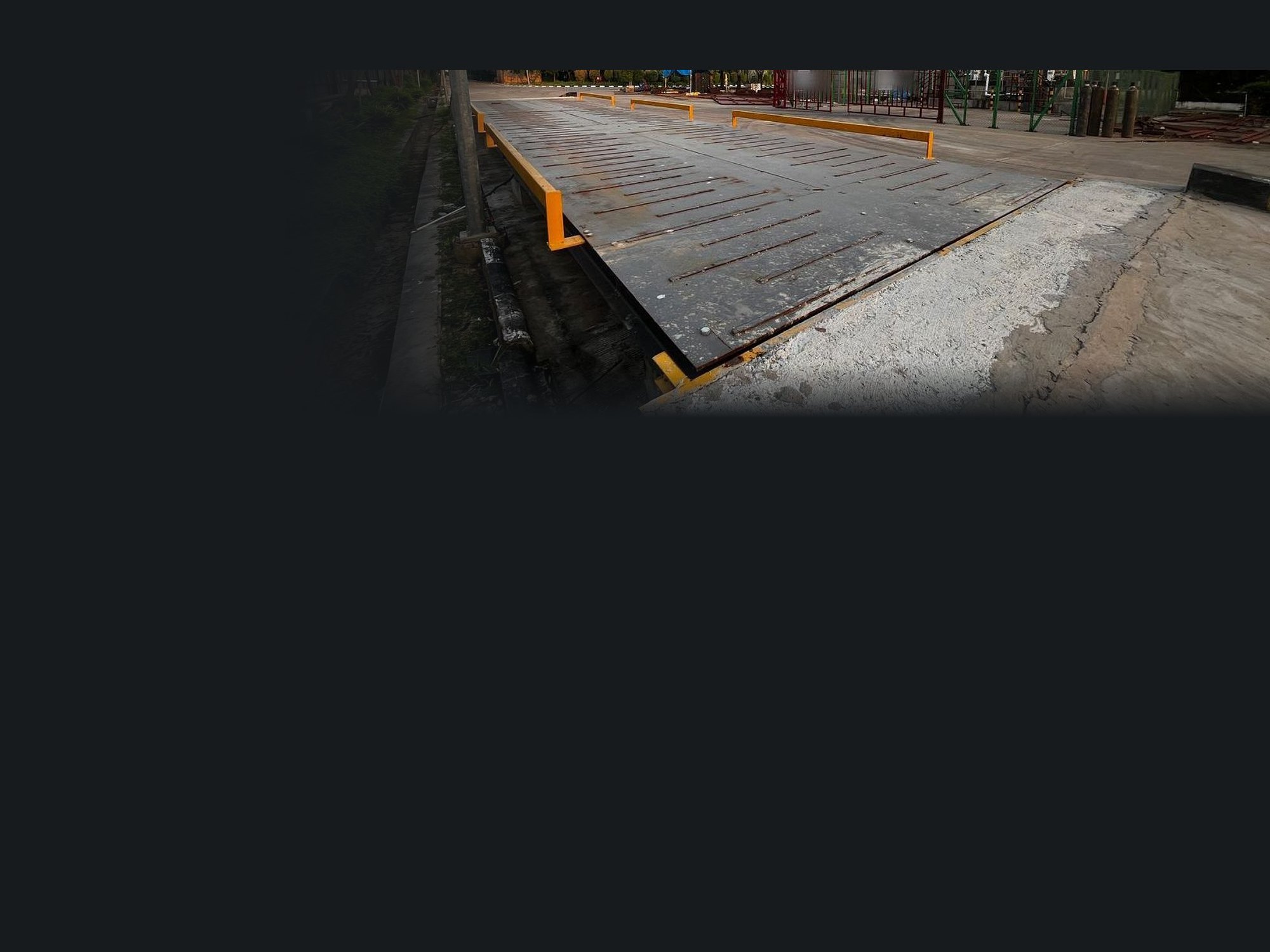
Katni weighbridges for lime kilns, dal mills and the mineral belt.
Katni, where the Mumbai–Howrah and the Bina–Bilaspur rail lines cross at one of the busiest junctions in central India, lives on limestone and pulses. The Vindhyan limestone around Murwara, Kymore and Bahoriband feeds the cement plant at Kymore, the lime kilns the town is known for, the marble and tile units and a ring of crushers; bauxite, ochre, fire clay and laterite leave the mines of the Katni–Vijayraghavgarh belt by the tipper for alumina, refractory and paint buyers; the dal mills of Katni turn the arhar, chana, urad and masoor of the Krishi Upaj Mandi into dal that goes out by the truck to Uttar Pradesh, Bihar and Bengal; the paddy of Dhimarkheda, Rithi and Badwara feeds the rice mills; and the marshalling yard and the sidings load and unload coal, clinker, bauxite and grain around the clock. Symphony supplies weighbridges, truck scales and dharam kanta (धर्म कांटा / tol kanta) across Katni district.
A lime kiln, a mineral trader or a crusher in Katni takes a 60–100 MT weighbridge on 16–18 m, pit-less steel or concrete (RCC), stamped for trade, with sealed IP67/IP68 load cells because lime and limestone dust get into everything; the cement plant gate at Kymore or a bauxite mine 100 MT on 18 m with the unmanned option (RFID, cameras, boom barrier); a dal mill or a pulse trader 40–60 MT on 12–16 m so a loaded truck of arhar and a tractor-trolley of chana both fit; a rice mill at Dhimarkheda or Rithi 40–60 MT on 12–16 m; an industrial unit at Lamtara or Amkuhi 60–80 MT on 16–18 m; a public weighbridge on the Jabalpur or Rewa road 60–100 MT on 16–18 m (dharam kanta). Symphony builds it in Ahmedabad and dispatches it about 2 weeks after a commercially cleared order with PO.
Limestone by the dense tipper, lime by the truck, arhar in and dal out: weights that stand up to Katni's dust.
- Lime dust that eats paint, limestone tippers at the axle limitRCC top or hard-coated steel, 100 MT on 18 m, sealed load cells.
- Limestone a hand's depth down at Murwara, black kanhar soil at Dhimarkheda, 46 °C and a metre of rainShallow pedestals on rock or deep ones below the clay; a sump and a pump-out for any pit.
- Arhar and chana in by the truck, dal out by the truck, paddy by the trolley from October12–16 m, grain-in and dal-out as separate reports, stored tares.
Who needs one in Katni: Lime kilns and lime traders of Murwara and the Jabalpur road; the cement plant at Kymore and the limestone mines that feed it; marble, tile and stone-cutting units; stone crushers and grit suppliers on the Jabalpur, Rewa and Panna roads; bauxite, ochre, laterite and fire-clay mines and mineral traders of the Katni–Vijayraghavgarh belt; dal mills and pulse traders of Katni; commission agents at the Katni, Barhi, Vijayraghavgarh and Dhimarkheda mandis; rice mills of Dhimarkheda, Rithi and Badwara; flour mills and oil expellers; engineering, fabrication, mineral-grinding and processing units in the Lamtara and Amkuhi industrial areas; coal, clinker and mineral transporters serving the sidings; warehouses and transporters on the Jabalpur, Rewa, Maihar, Shahdol and Umaria roads; public dharam kanta operators.
Also called a dharam kanta (धर्म कांटा), truck scale or weigh bridge. We also serve Murwara, Kymore, Barhi, Vijayraghavgarh, Slimanabad, Dhimarkheda, Rithi, Bahoriband, Badwara.
Kilns, mines, dal mills and siding transporters across Katni district.
Lime kilns and lime traders
Limestone arrives from the mines by the dense tipper, lime leaves the kiln as lump and powder by the truck, and the dust of both coats the platform, the rails and the cabin; a buyer in Uttar Pradesh or Bihar pays against the slip.
Our setup: A 60–100 MT, 16–18 m weighbridge with a concrete (RCC) top that lime does not attack, IP67/IP68 sealed load cells, a potted junction box, cable in closed conduit and SMFW slips by party, material and vehicle.
Dal mills and pulse traders
Arhar, chana, urad and masoor come in by the truck from the mandi, dal goes out by the truck and chuni and husk by the small vehicle, and the mill earns on the yield between the two.
Our setup: A 40–60 MT, 12–16 m pit-less steel weighbridge, stamped, with SMFW splitting the traffic into grain-in and dal, chuni and husk-out reports, stored tares for the mill's own vehicles and a report by lot for the owner.
Mines, crushers and siding transporters
Bauxite, ochre and limestone are dense, a tipper reaches the axle limit while the body looks half full, and a transporter serving the sidings weighs 10-wheelers, bulkers and 40-foot trailers on the same platform in every shift.
Our setup: A 100 MT, 18 m weighbridge in pit-less steel or RCC, built for the axle load, with the unmanned option (RFID, cameras, boom barrier) for the gate and SMFW reports by grade, pit and vehicle.
- Murwara and the Katni–Jabalpur roadlime kilns, marble and tile units, dal mills, the grain mandi, transport
- Kymore and Bahoribandthe cement plant, limestone mines, crushers, lime traders
- Lamtara and Amkuhi industrial areasengineering, fabrication, processing and mineral-grinding units
- Vijayraghavgarh, Barhi and Slimanabadbauxite, ochre and fire-clay mines, mandis, flour mills, the Rewa and Shahdol roads
- Dhimarkheda, Rithi and Badwarapaddy and wheat mandis, rice mills, oil expellers
- Katni junction, the marshalling yard and the Umaria roadsidings, coal and clinker transporters, warehouses, goods sheds
Rock under Murwara, kanhar clay at Dhimarkheda, lime dust and a metre of rain: what a Katni weighbridge has to survive.
Lime is the first thing a Katni weighbridge has to survive. Limestone leaves the mines around Murwara, Kymore and Bahoriband by the loaded tipper for the kilns, the cement plant and the crushers, lime leaves the kilns by the truck as lump and powder, and the dust of both settles on everything in the yard; lime dust is alkaline and draws moisture, so an ordinary alkyd-painted platform at a kiln loses its paint within a few seasons and the bare steel then rusts under the damp dust. The kiln or lime trader's weighbridge is therefore 60–100 MT on 16–18 m with a concrete (RCC) top that lime does not attack, which carries a 25-year structural warranty, or pit-less steel with a hard-wearing coat, and in both cases the load cells are IP67/IP68 sealed, the junction box is potted again on site and the cable runs in closed conduit so the dust and the wash-down water stay out. Limestone and bauxite are dense loads: a tipper looks half full and is already at its axle limit, so the mineral trader's and the mine's platform is rated 100 MT on 18 m and built for the axle load, with SMFW reports by grade, pit and vehicle, and at the cement plant gate at Kymore and the bauxite loading points the unmanned option (RFID, cameras, boom barrier) lets three shifts of tippers, bulkers and clinker trailers clear without a clerk in the cabin. The marshalling yard and the sidings add a second kind of traffic: coal in, clinker and bauxite out, grain and dal to the goods sheds, and a transporter who serves the sidings weighs an odd mix of 10-wheel trucks, 40-foot trailers and bulkers on the same platform every day, which is why 18 m is the usual length in Katni. The dal mills work the other way round: arhar, chana, urad and masoor come in by the truck from the Katni mandi and the Vijayraghavgarh and Barhi yards from October and again from March, dal goes out by the truck and chuni and husk by the small vehicle, and the mill lives on the yield between the two, so a 40–60 MT, 12–16 m pit-less steel weighbridge, with SMFW splitting the mill's traffic into grain-in and dal, chuni and husk-out reports and holding stored tares for the mill's own vehicles, is the dal mill's instrument as much as its grader. Paddy fills the Dhimarkheda, Rithi and Badwara side from October to December, heaped on tractor-trolleys to the mandi and the rice mills, so a 12–16 m platform that reads the tractor and its trolley together saves the queue a second weighing. The ground is Vindhyan limestone and dolomite close under the surface around Murwara, Kymore and Bahoriband, so a pit is expensive to cut and a pit-less platform on shallow pedestals bearing on the rock is the better buy, with no blasting for a pit; the Dhimarkheda and Rithi plains carry black kanhar soil that opens in the heat and holds water in the rains, so there the pedestals go below the moving layer and the approaches are given a fall to a drain, and a yard beside the Katni river or a nala is set above the flood line. May passes 46 °C with limestone dust in the wind, so the cabin is shaded and the test-weight calibration is done in the morning; the monsoon brings about a metre of rain between June and September, so a pit-type weighbridge is given a sump and a pump-out and most Katni buyers take pit-less instead. Book Legal Metrology stamping or the annual re-verification in September, so the certificate is in hand before the paddy trolleys and the winter lime despatches begin.
| Recommended for | Vehicles | Capacity | Weighbridge | Type |
|---|---|---|---|---|
| Lime kiln or lime trader, Murwara or the Jabalpur road | Lime trucks, limestone tippers | 60–100 MT | 16–18 m | RCC or pit-less steel, stamped |
| Limestone, bauxite or ochre mine, Kymore or the Vijayraghavgarh belt | Loaded tippers, multi-axle trucks | 100 MT | 18 m | Pit-less steel or RCC, stamped, unmanned option |
| Cement plant gate or siding transporter, Kymore or Katni | Clinker trailers, bulkers, coal trucks | 100 MT | 18 m | Pit-less steel or RCC, stamped, unmanned option |
| Dal mill or pulse trader, Katni | Pulse trucks, tractor-trolleys of chana and arhar | 40–60 MT | 12–16 m | Pit-less steel, stamped |
| Rice mill or mandi commission agent, Dhimarkheda, Rithi or Barhi | Paddy trolleys, 10-wheel trucks | 40–60 MT | 12–16 m | Pit-less steel, stamped |
| Public weighbridge, Jabalpur, Rewa or Umaria road | Trolleys to 40-foot trailers | 60–100 MT | 16–18 m | Pit-less steel or RCC, stamped |
Starting points only. Send your heaviest truck and daily traffic and we confirm the size.
From the kiln-yard drawing to the first stamped lime truck: what a Katni order looks like.
Six steps for your project in Katni. Most of the waiting is the foundation curing, so the drawing comes first.
- 1 · Your traffic in KatniTell us the heaviest vehicle you weigh (here, typically lime trucks, limestone tippers), the space at the gate and the daily count. An engineer replies within one working day.
- 2 · Size and quotationOur usual starting point (lime kiln or lime trader, Murwara or the Jabalpur road): 60–100 MT, 16–18 m weighbridge, RCC or pit-less steel, stamped. The quotation comes with the foundation drawing.
- 3 · Foundation on siteYour civil contractor builds it to our drawing; a pit-type weighbridge needs a drained pit with a sump. We can check the levels before the weighbridge arrives.
- 4 · Fabrication and dispatchBuilt and tested in our Ahmedabad workshop; dispatch in about 2 weeks from a commercially cleared order with PO, then delivered and placed on your foundation.
- 5 · Installation and calibrationWeighbridge placed, load cells and indicator connected and calibrated, SMFW stored tares set up (RFID, cameras and boom barrier where ordered), and Legal Metrology verification supported.
- 6 · AMC and serviceAMC, breakdown visits, calibration and annual re-verification support from our technical desk, so the weighbridge stays accurate for years.
What Katni's lime traders and dal millers ask us.
Who supplies weighbridges in Katni?
Which weighbridge suits a lime kiln, a mineral trader or a crusher in Katni?
Which weighbridge suits a dal mill or a rice mill in Katni?
How long does a Katni weighbridge take to arrive?
What decides the cost of a weighbridge in Katni?
कटनी में चूना भट्टी, दाल मिल या खनिज व्यवसाय के लिए धर्म कांटा कैसे स्थापित करें?
Tell us your site. We recommend the platform.
Send a site photo, vehicle size and daily vehicle count. An engineer replies within one working day.