
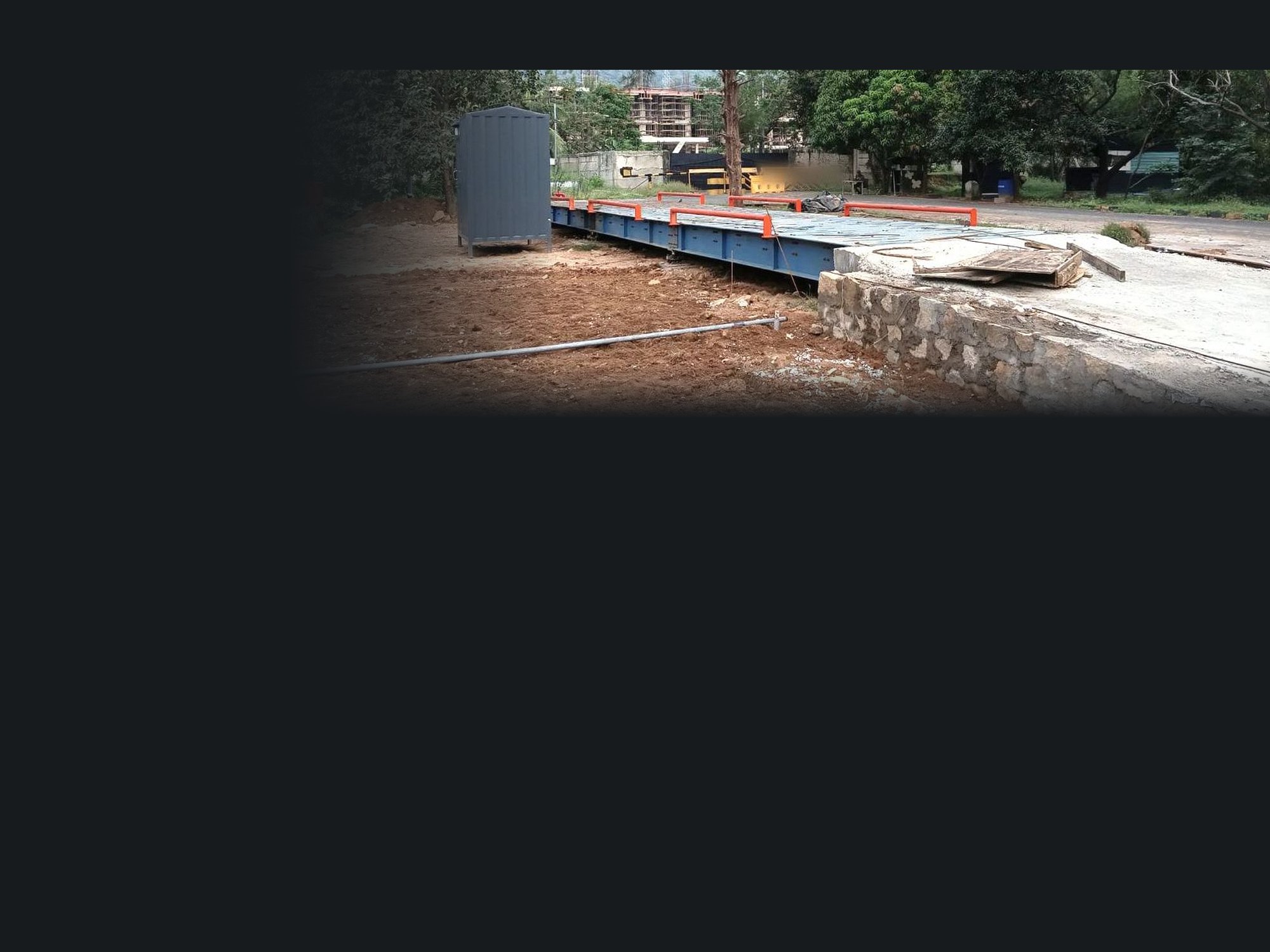
Hanumangarh weighbridges for cotton gins, rice shellers and mandi traders.
Hanumangarh, where the Ghaggar runs into the canal country of northern Rajasthan, is a district of cotton gins, rice shellers and grain mandis. Canal water grows cotton, wheat, mustard, guar, gram and paddy across the district; the Krishi Upaj Mandis at Hanumangarh Town and Junction, Sangaria, Pilibanga, Rawatsar, Nohar and Bhadra take the arrivals; cotton ginning and pressing factories and cottonseed oil mills work the kapas from October; rice shellers mill the paddy of the Ghaggar belt; guar gum units split and grind the kharif guar; and the RIICO industrial area at Hanumangarh Junction holds processing, oil and engineering units. Symphony supplies weighbridges, truck scales and dharam kanta (धर्म कांटा / tol kanta) across Hanumangarh district.
A cotton ginning factory in Hanumangarh usually needs a 40–60 MT, 14–16 m pit-less steel weighbridge stamped for trade, long enough for a tractor with a heaped kapas trolley; a rice sheller, a guar gum unit or a cottonseed oil mill 60 MT on 16 m with SMFW records by lot; a mandi commission agent 40–60 MT on 12–16 m; a RIICO processing plant at Hanumangarh Junction 60–80 MT on 16–18 m with the unmanned option (RFID, cameras, boom barrier); a public weighbridge on the Sri Ganganagar or Sirsa road 60–100 MT on 16–18 m (dharam kanta). Symphony builds it in Ahmedabad and dispatches it about 2 weeks after a commercially cleared order with PO.
Kapas by the heaped trolley, paddy by the truck, wheat at Baisakhi: a stamped weight for every Hanumangarh season.
- Kapas in, bales and seed outOne gin gate, three SMFW reports, one stamped weight.
- Canal loam, Ghaggar floods and May dustRaised pedestals, a swept gap, sealed IP67/IP68 cells.
- Fog and frost in JanuaryClosed junction box, sealed glands, a dry cabin.
Who needs one in Hanumangarh: Cotton (narma and desi kapas), wheat, mustard, guar, gram, barley, moong and paddy traders and commission agents at the Hanumangarh Town, Hanumangarh Junction, Sangaria, Pilibanga, Rawatsar, Nohar, Bhadra and Tibbi mandis; cotton ginning and pressing factories and cottonseed (binola) oil mills; rice shellers and paddy traders; guar gum splitting and powder units; mustard oil expellers and flour mills; cattle-feed and khal dealers; cold storages and warehouses; brick kilns; sand and grit suppliers for canal and road works; processing and engineering units in the RIICO industrial area at Hanumangarh Junction; transporters on the Sri Ganganagar, Sirsa and Bikaner roads; public dharam kanta operators.
Also called a dharam kanta (धर्म कांटा), truck scale or weigh bridge. We also serve Hanumangarh Junction, Sangaria, Pilibanga, Rawatsar, Nohar, Bhadra, Tibbi, Goluwala.
Gins, shellers, guar units and mandi traders across Hanumangarh district.
Cotton ginning and pressing factories
Kapas is light and bulky, so a trolley comes heaped under a net and hangs well beyond its body; the gin sells lint in bales of about 170 kg and cottonseed to the oil mills, and the ginning outturn between kapas in and bales out is the factory's margin for the season.
Our setup: A 40–60 MT, 14–16 m pit-less steel weighbridge, stamped, that takes the tractor and the whole heaped trolley together, with SMFW reports for kapas-in by grower and lot, bales-out by press mark and seed-out by buyer.
Rice shellers of the Ghaggar belt
Paddy off the Ghaggar flood plain reaches the shellers from October in trolleys and 10-wheel trucks, two trolleys behind one tractor as often as not; the sheller buys on the moisture reading, sells rice, bran and husk out by the truck, and checks the milling outturn against every lot.
Our setup: A 60 MT, 16 m pit-less steel weighbridge, long enough for a double trolley, with paddy-in and rice-out kept as separate SMFW reports and the moisture and variety printed on the procurement slip.
Guar gum and cottonseed oil units
Guar seed comes from the mandis by the truck in October and November and leaves as split and powder; binola comes from the gins and leaves as oil by the tanker and cake by the truck, often at night in season.
Our setup: A 60 MT, 16 m pit-less steel weighbridge with stored tares for the regular tankers, the unmanned option (RFID, cameras, boom barrier) for the night shift and SMFW reports by party, material and shift.
- Hanumangarh Junction and the RIICO industrial areacotton gins, oil mills, guar gum and processing units, transport
- Hanumangarh Town mandi and the Ghaggar beltwheat, cotton, paddy and mustard arrivals, rice shellers
- Sangaria and Tibbicotton ginning, paddy and wheat trade, mandis
- Pilibanga and Rawatsarcotton, guar and gram mandis, ginning and oil units
- Nohar and Bhadraguar, bajra, moth and mustard mandis, oil expellers, brick kilns
- Goluwala and the canal villagescotton and wheat trade, cold storages, dairy
Canal loam, Ghaggar floods, May dust and January fog: building a weighbridge in Hanumangarh.
Kapas sets the length of a Hanumangarh weighbridge. Seed cotton is light and bulky, so a tractor-trolley comes to the gin heaped high under a net and hangs well beyond its own body, and a short platform never carries the whole load; a 40–60 MT, 14–16 m pit-less steel weighbridge takes the tractor and its heaped trolley in one weighing from October to January, and SMFW prints the grower, lot and variety (narma or desi) on every slip. The gin then presses lint into bales of about 170 kg and sells cottonseed (binola) by the truck to the oil mills, so three movements pass through one gate and are kept as three reports: kapas in by lot, bales out by press mark, seed out by buyer; the ginning outturn between them is the factory's margin for the season. Paddy from the Ghaggar belt around Hanumangarh, Tibbi, Sangaria and Pilibanga reaches the shellers in October and November in trolleys and 10-wheel trucks, is bought after the moisture check and is weighed again as rice, bran and husk on the way out, so a sheller takes 60 MT on 16 m, long enough for a double trolley, with paddy-in and rice-out as separate SMFW reports. Guar comes to the mandis in October and November and goes to the splitting and powder units by the truck; wheat is the biggest arrival of the year and fills the Hanumangarh, Sangaria and Rawatsar yards from Baisakhi; mustard and gram arrive in March; so a commission agent's platform runs from the kapas season to the end of the wheat arrivals and rests only in the monsoon. The ground is canal-irrigated alluvial loam, flat and easy to excavate, but the water table stands high in much of the canal command and the Ghaggar spreads over its plain in a heavy monsoon, so the weighbridge goes pit-less on raised pedestals with the plinth above the level the water reached in the last wet year, a pit-type weighbridge is chosen only with a sump and pump-out, and the approach is drained away from the plate. Dust storms blow across the district in May and June and fill any open gap, so the load cells are sealed IP67/IP68 and the gap around the platform is swept clear; December and January bring fog, with frost on the coldest nights, so the junction box is closed, the cable glands are sealed and the indicator sits in a dry cabin. Book Legal Metrology stamping or the annual re-verification in September, so the certificate is in hand before the first kapas trolley arrives.
| Recommended for | Vehicles | Capacity | Weighbridge | Type |
|---|---|---|---|---|
| Cotton ginning and pressing factory | Heaped kapas trolleys, 10-wheel trucks, bale trucks | 40–60 MT | 14–16 m | Pit-less steel, stamped |
| Rice sheller or paddy trader, Ghaggar belt | Double paddy trolleys, 10-wheel trucks, bagged rice | 60 MT | 16 m | Pit-less steel, stamped |
| Mandi commission agent, Hanumangarh, Sangaria or Nohar | Tractor-trolleys of wheat, mustard, guar and gram | 40–60 MT | 12–16 m | Pit-less steel, stamped |
| Guar gum unit or cottonseed oil mill | Seed trucks, split and powder trucks, oil tankers | 60 MT | 16 m | Pit-less steel, stamped, unmanned option |
| RIICO processing or engineering unit, Hanumangarh Junction | Multi-axle trucks, trailers | 60–80 MT | 16–18 m | Pit-less steel or RCC, stamped |
| Public weighbridge, Sri Ganganagar or Sirsa road | Trolleys to multi-axle trucks | 60–100 MT | 16–18 m | Pit-less steel or RCC, stamped |
Starting points only. Send your heaviest truck and daily traffic and we confirm the size.
From the Junction mandi gate to the first stamped kapas slip: six steps in Hanumangarh.
Six steps for your project in Hanumangarh. Most of the waiting is the foundation curing, so the drawing comes first.
- 1 · Your traffic in HanumangarhTell us the heaviest vehicle you weigh (here, typically heaped kapas trolleys, 10-wheel trucks, bale trucks), the space at the gate and the daily count. An engineer replies within one working day.
- 2 · Size and quotationOur usual starting point (cotton ginning and pressing factory): 40–60 MT, 14–16 m weighbridge, Pit-less steel, stamped. The quotation comes with the foundation drawing.
- 3 · Foundation on siteYour civil contractor builds it to our drawing; a pit-type weighbridge needs a drained pit with a sump. We can check the levels before the weighbridge arrives.
- 4 · Fabrication and dispatchBuilt and tested in our Ahmedabad workshop; dispatch in about 2 weeks from a commercially cleared order with PO, then delivered and placed on your foundation.
- 5 · Installation and calibrationWeighbridge placed, load cells and indicator connected and calibrated, SMFW stored tares set up (RFID, cameras and boom barrier where ordered), and Legal Metrology verification supported.
- 6 · AMC and serviceAMC, breakdown visits, calibration and annual re-verification support from our technical desk, so the weighbridge stays accurate for years.
What Hanumangarh's ginners and Sangaria's traders ask us.
Who supplies weighbridges in Hanumangarh?
Which weighbridge suits a cotton ginning factory in Hanumangarh?
Which weighbridge suits a rice sheller or a mandi trader in Hanumangarh district?
How long does a Hanumangarh weighbridge take to arrive?
What decides the cost of a weighbridge in Hanumangarh?
हनुमानगढ़ में कपास जिनिंग या मंडी के व्यापार के लिए धर्म कांटा कैसे स्थापित करें?
Tell us your site. We recommend the platform.
Send a site photo, vehicle size and daily vehicle count. An engineer replies within one working day.