
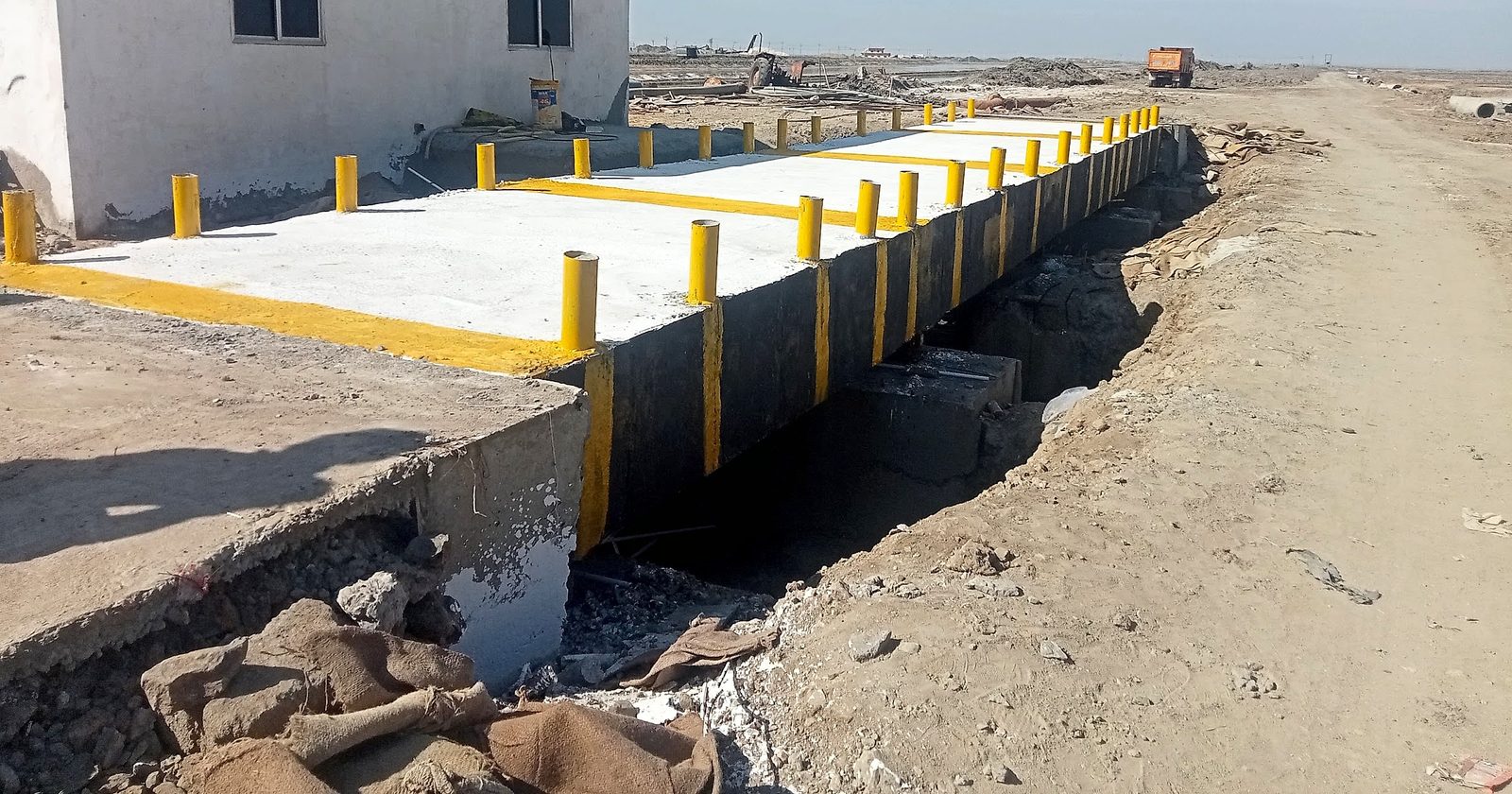
Deodar GIDC weighbridges for feed, agro and packing plants.
Deodar is a taluka in Banaskantha district, and GIDC lists a Deodar estate among its allotment notices. The surrounding north Gujarat farm country is typically associated with crops such as castor, mustard, bajra and potato, and with dairy and cattle feed. Agro units, feed makers, packers and small fabricators on an industrial estate in such a district all buy or sell by weight. Symphony supplies weighbridges, truck scales and dharam kanta (धर्म कांटा / tol kanta) for plants and yards at Deodar GIDC and the roads around it. A weighbridge planned early keeps every later gate and plot consistent. Where a few plots share a gate or a boundary lane, party codes in SMFW keep each firm's slips separate. A plant that has its weighing in order from the start finds it easier to win supply contracts and to settle claims quickly.
A new unit at Deodar GIDC often starts with a 60 MT weighbridge over 15 m in pit-less steel, placed near the gate so that raw material and finished goods use the same lane. Small packers and job-work shops with pickups and tempos can take 30 MT over 9 m. Cattle-feed and oilseed units that receive full trailers should choose 80 MT over 18 m. A plot-holder who may move can place a foundation-free modular weighbridge on a level slab. Our works ships about 2 weeks after a PO clears commercially, so the cabin and approaches are ready on arrival.
A new estate deserves a weighbridge laid out right from day one.
- Planned with the estate roadsThe lane, cabin and holding bay are drawn on your own plot plan.
- Ground prepared firstA compacted base and cast slab stop a platform from rocking.
- Records that grow with youParties, materials and shifts are stored from the first day and stay on file.
Who needs one in Deodar GIDC: Typical weighbridge users: cattle-feed and agro-processing units, oilseed and grain traders, packaging units, fabrication and building-material suppliers, and transport owners.
Also called a dharam kanta (धर्म कांटा), truck scale or weigh bridge. We also serve Deesa, Palanpur, Tharad.
Feed mills, packers and traders across the Deodar estate.
Cattle-feed and agro plants
Seed, cake and bagged feed move in both directions on full trailers.
Our setup: Suggested: 80 MT on 18 m, sealed cells and a dust-tight box.
Packers and processors
Mixed vehicles bring inputs in and take cartons out.
Our setup: Suggested: 60 MT on 15 m steel beside the gate cabin.
Plot-holders who may move
A plant can expand or change hands within a few seasons.
Our setup: Suggested: modular weighbridge on a slab, or one platform now and an RFID gate later.
- Deodar GIDCunits on allotted plots
- Deesapotato and agro trading yards
- Palanpurdairy and industrial belt
- Tharadmarket town
Ground, drainage and lane layout: siting a weighbridge at Deodar.
Where a plot is on newly laid ground, settle it before the platform arrives. Compact the base, cast a level slab and slope the apron toward the estate drain; sand and rain-wash are the usual enemies of an open-yard weighbridge. Where a plant serves farm trade, the load mix can change through the year: seed and cake in one season, bagged feed and packed goods in another, so choose a platform length by your longest regular trailer, not by the average truck. Keep the weighing lane clear of parked vehicles and mark a waiting bay near the gate. Put the cabin on the exit side with a window onto the platform, and keep the printer away from sun and dust. SMFW stores each supplier, buyer and material, prints one slip per consignment and totals every shift, which is useful when one plot runs both inward and outward lanes. A new unit with a single gate can start with one platform and add an RFID reader, camera and boom barrier later without moving the cabin. A new plant may run on a temporary supply at first, so fit a UPS, earthing and a surge arrestor from day one. A tenant on a short allotment can choose a bolt-together modular weighbridge and take it along. Any slip used for payment must come from a weighbridge passed under Legal Metrology and re-verified as required; we support the stamping paperwork. Share a plot plan and one gate photo, and we mark the platform, approaches and cabin on it before work starts. When a plot is allotted, the weighbridge is usually the first piece of equipment that touches the gate, so it is worth planning the whole entry sequence at once: the security cabin, the weighing lane, the loading bay and the exit. A lane that loops through the plot lets a truck weigh in, load and weigh out without reversing. Keep the platform on a straight stretch, with at least one truck length of clear, level ground on both sides, and avoid placing it right at a bend where drivers brake while rolling on. Estate roads are shared with other plots, so a waiting bay inside your boundary keeps your queue off the common lane. If you expect two plants to share a gate, give each its own party code and daily total in SMFW. Do not let the display face the afternoon sun, and mount the printer inside a ventilated box. After the first rains of the season, check the apron levels and re-level the platform if a corner sinks. Maintain a simple weekly checklist: clean the gap, test with a known load, inspect cables and junction box, and tick it off in a register that stays in the cabin. One more habit pays off in a new plant: record the first month. Note the number of vehicles, the heaviest load, the time of the daily peak and the materials weighed, then compare it with what you assumed when you chose the platform. If the heaviest trailer is longer than planned, the cabin and the approaches have already been drawn to allow a longer platform, so the upgrade is a matter of replacing the platform rather than rebuilding the gate. If your own trucks dominate, store their tare so the second weighing takes seconds. And if a neighbouring plot wants to weigh occasionally, set a party code for them so their slips never mix with yours. Keep a small file for the gate: the plot plan with the lane drawn on it, the Legal Metrology certificate, the SMFW party list, the date of the last test load and the phone number of our service desk. Whoever joins the plant later can pick up the file and run the weighing without guesswork. Review the file after every change of shift pattern, and again whenever a new product, supplier or customer adds a different kind of vehicle to the lane. A short note on which trucks must use the platform and which may bypass it also saves arguments at the gate.
| Recommended for | Vehicles | Capacity | Weighbridge | Type |
|---|---|---|---|---|
| Cattle-feed or agro plant | Raw material in, bagged feed out | 80 MT | 18 m | Heavy steel or RCC, sealed IP68/IP69K cells, dust-tight box |
| Oilseed or grain buyer | Trucks and tractors in the harvest weeks | 60 MT | 15 m | Raised steel, paved apron, slips by party |
| Packer or processor | Cartons and inputs on mixed vehicles | 60 MT | 15 m | Steel platform beside the gate cabin, slip per consignee |
| Fabricator or job-work shop | Pickups and tempos | 30 MT | 9 m | Low steel platform with stamping support |
| Plot-holder who may relocate | Plant may expand or change hands | 50 MT | 12 m | Modular weighbridge on a level slab |
| After-hours gate | Repeat trucks with no clerk | 60 MT | 15 m | RFID reader, camera and boom barrier on SMFW |
Starting points only. Send your heaviest truck and daily traffic and we confirm the size.
From a plot plan to the first slip: a Deodar GIDC weighbridge in six steps.
Six steps for your project in Deodar GIDC. Most of the waiting is the foundation curing, so the drawing comes first.
- 1 · Your traffic in Deodar GIDCTell us the heaviest vehicle you weigh (here, typically raw material in, bagged feed out), the space at the gate and the daily count. An engineer replies within one working day.
- 2 · Size and quotationOur usual starting point (cattle-feed or agro plant): 80 MT, 18 m weighbridge, Heavy steel or RCC, sealed IP68/IP69K cells, dust-tight box. The quotation comes with the foundation drawing.
- 3 · Foundation on siteYour civil contractor builds the concrete pedestals to our drawing; we can check the levels before the weighbridge arrives.
- 4 · Fabrication and dispatchBuilt and tested in our Ahmedabad workshop; dispatch in about 2 weeks from a commercially cleared order with PO, then delivered and placed on your foundation.
- 5 · Installation and calibrationWeighbridge placed, load cells and indicator connected and calibrated, SMFW stored tares set up (RFID, cameras and boom barrier where ordered), and Legal Metrology verification supported.
- 6 · AMC and serviceAMC, breakdown visits, calibration and annual re-verification support from our technical desk, so the weighbridge stays accurate for years.
What Deodar GIDC plot owners ask before ordering.
Who supplies weighbridges at Deodar GIDC?
Which size suits a feed or agro plant?
How is a new estate's loose ground handled?
Can we add an unattended gate later?
Can a tenant on a short allotment use a modular weighbridge?
Does the slip need verification?
What decides the cost of a weighbridge at Deodar GIDC?
देवदर जीआईडीसी में नई इकाई के लिए वेब्रिज कैसे चुनें?
Limited-time offer: our weighbridge phone app (SMFW WOS) is free with your weighbridge. See what the app shows.
Tell us your site. We recommend the platform.
Send a site photo, vehicle size and daily vehicle count. An engineer replies within one working day.