
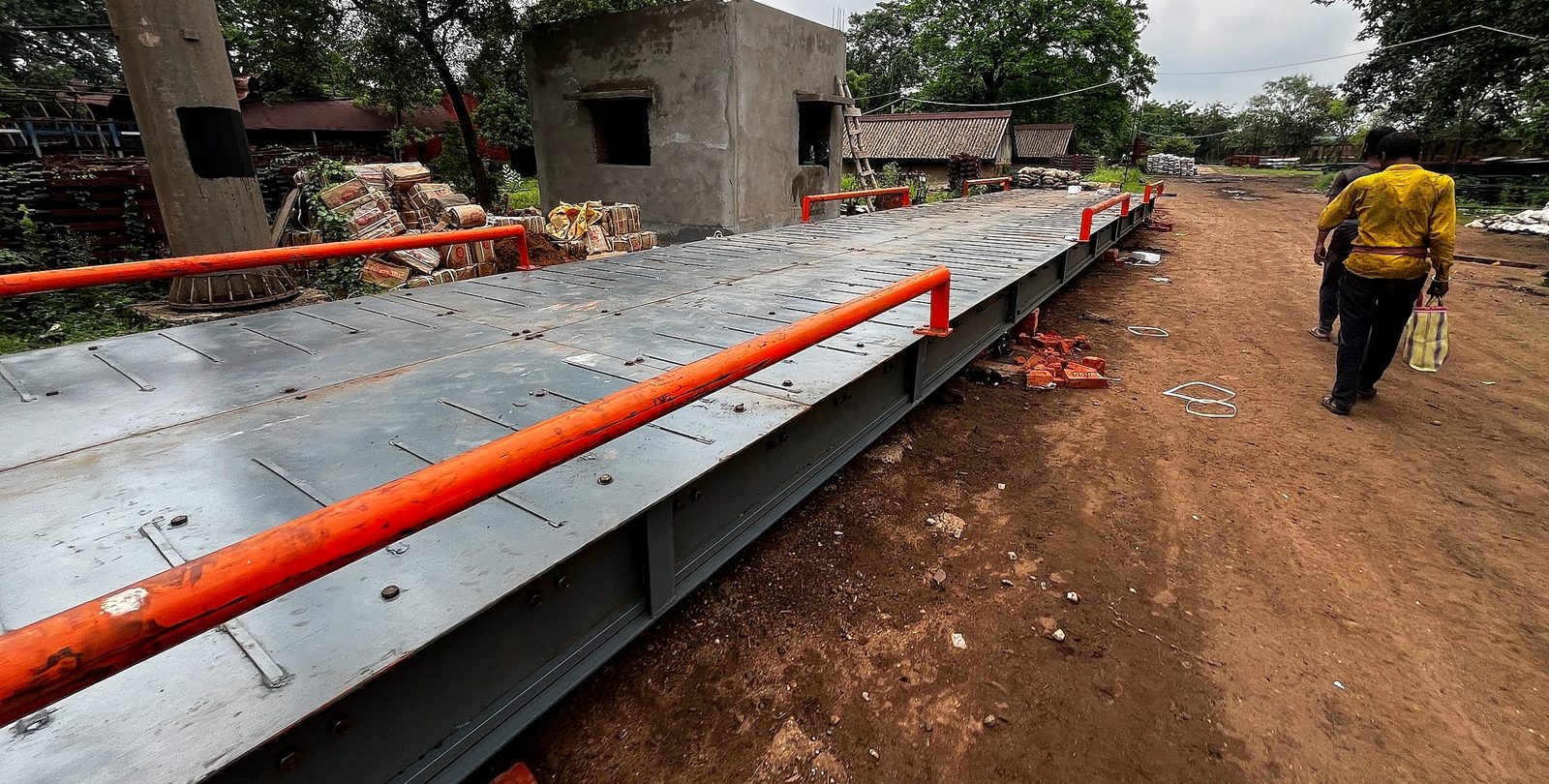
Sihori weighbridges for fodder, feed and grain yards.
Sihori is the headquarters town of Kankrej taluka in Banaskantha district, and the Kankrej name is known across India for the cattle breed raised here. A cattle-and-crop economy means milk, fodder, cattle feed, castor, bajra and mustard typically travel by tractor and truck, in a market town where feed and fodder dealers and small workshops typically operate. Symphony supplies weighbridges, truck scales and dharam kanta (धर्म कांटा / tol kanta) for yards, feed units and workshops in and around Sihori. Where fodder is bought by the tonne and feed is sold by the bag, the weight on the slip decides who earns what. Because dairy is an important livelihood in this part of Banaskantha, feed and fodder are bought daily, and a small difference in weight repeated over hundreds of tractors becomes a very large difference in money. In a cattle-farming area, trust in the weight of fodder and feed is part of daily business.
Sihori feed and fodder yards often start at a 50 MT weighbridge over 14 m in pit-less steel, with a wide approach for piled trailers and a shaded cabin for the printer. Dealers who handle only tractors and pickups can begin at 30 MT over 9 m. A cattle-feed mill that receives full trailers should look at 70–80 MT over 18 m. A yard that is busy only in some months may set a foundation-free modular weighbridge on level concrete. The works ships about 2 weeks after a PO clears commercially.
Piled fodder, bagged feed: each load weighed and slipped properly.
- Room for tall loadsThe approach and overhead clearance are checked for piled fodder.
- Straw and feed dust kept outSealed cells and a closed box suit dry, dusty yards.
- One record per farmerSMFW keeps party, crop, grade and weight together on each slip.
Who needs one in Sihori: Typical weighbridge users: cattle-feed and fodder dealers, oilseed and grain traders, dairy-linked suppliers, small engineering and fabrication shops, building-material yards and transport owners.
Also called a dharam kanta (धर्म कांटा), truck scale or weigh bridge. We also serve Palanpur, Deesa, Radhanpur.
Feed mills, dealers and traders across Kankrej's market town.
Fodder and straw dealers
Bulky loads arrive piled high on tractors and pickups.
Our setup: Suggested: 30 MT on 9 m, extra-wide approach.
Cattle-feed mills
Cake and grain come on long trailers, and dust works into the gap.
Our setup: Suggested: 70–80 MT on 18 m, sealed cells, clean gap.
Castor and mustard traders
Lots are bought from many farmers in a short season.
Our setup: Suggested: 50 MT on 14 m steel, paved apron, slip per farmer.
- Sihori market yardsfeed dealers and workshops
- Palanpurdairy and industrial belt
- Deesapotato and agro trading yards
- Radhanpurtown yards
Straw dust, sandy ground and wide loads: siting a weighbridge at Sihori.
Fodder and feed are bulky and light, so trailers arrive piled high and wide; give the approach extra width and keep the weighing lane clear of overhead wires and branches. Dry straw and feed dust blow into the gap under the platform, so use a closed junction box, sealed IP68/IP69K cells and a brush-down once a week, and keep the area under the platform free of anything that can catch fire. Where the soil is sandy, a compacted base and a cast slab stop the platform from settling on one side; slope the apron to a drain so that rain does not pool at the edges. A dealer who buys from many farmers can store each one as a party in SMFW, print a slip per lot and finish the day with a total by crop. A feed unit can record raw material in and bagged feed out on separate slips with the vehicle number and time. The cabin works best on the exit side with a clear view of the platform, and the printer needs shade. Supply can be patchy in village-edge yards, so fit a UPS, earthing and a surge arrestor. If you want weighments logged after the clerk leaves, tagged vehicles can be read by RFID, photographed and cleared by a barrier. Slips that settle a purchase must come from a weighbridge verified under Legal Metrology and re-verified as the rules require; we help with the stamping paperwork. Send a plot photo and your gate position; the platform, approaches and cabin are marked before any digging. A feed yard works in a rhythm. Raw material arrives in the morning, bagging runs through the day, and dispatch trucks queue in the evening. A weighbridge that serves all three needs a lane that is not blocked by the bagging line, so place the platform at the gate rather than deep inside the yard. Fodder dealers buy from many small sellers, so they care about the tare: record the tare of regular tractors in SMFW and the second weighing shrinks to seconds. If a driver disputes the figure, the clerk can reprint the slip with the date, time and vehicle number. Keep long straw away from the cabin and cables, because dry fodder carries fire risk, and keep an extinguisher near the display. Cattle-feed mills may need separate slips for each ingredient and for each batch of finished feed, which the party and material fields handle without extra software. Mark the lane in yellow, put a speed breaker before the platform and paint the edge of the platform so a driver can see where to stop. In the monsoon, check the apron for ruts and fill them before the next shift. Dairy and feed businesses run on schedules, so keep the process short: arrive, weigh, collect the slip and leave. SMFW can recall a vehicle's stored tare by its number, so the return weighing is automatic, and a second clerk is not required. If one person handles the gate, the cabin, the slip book and the parties, give them a one-page procedure and a spare printer ribbon. In the monsoon, check that the cabin roof does not leak above the printer, and keep the cable path raised above the floor. At the end of each month, total the weights by party and crop, and keep the printed summary with the accounts. Agree one rule for tare at the start of every season: either every regular tractor is weighed empty on the same morning, or its stored tare is trusted for a fixed number of days. Write the rule on a board beside the window so that sellers, drivers and clerks all see the same thing. Fodder moisture changes with the weather, so note the weather on the slip book on rainy days; a seller and a buyer who disagree later can look at the record instead of at each other. Keep the platform clear of straw heaps overnight, and sweep the approach before the first vehicle of the day.
| Recommended for | Vehicles | Capacity | Weighbridge | Type |
|---|---|---|---|---|
| Fodder and straw dealer | Piled tractors and pickups | 30 MT | 9 m | Low steel platform with an extra-wide approach |
| Cattle-feed mill | Cake, grain and bagged feed on full trailers | 70–80 MT | 18 m | Heavy steel or RCC, sealed IP68/IP69K cells, dust-tight box |
| Castor and mustard trader | Seasonal tractors and trucks | 50 MT | 14 m | Raised steel, paved apron, slips by farmer |
| Feed or dairy-input supplier | Packaging and inputs on mixed vehicles | 60 MT | 15 m | Steel platform, roofed cabin, slip per consignee |
| Yard in use for a season | Busy only some months | 50 MT | 14 m | Modular platform on a hard level slab |
| Unmanned gate | Regular carriers after hours | 60 MT | 15 m | RFID reader, camera and boom barrier on SMFW |
Starting points only. Send your heaviest truck and daily traffic and we confirm the size.
From a plot photo to the first slip: a Sihori weighbridge in six steps.
Six steps for your project in Sihori. Most of the waiting is the foundation curing, so the drawing comes first.
- 1 · Your traffic in SihoriTell us the heaviest vehicle you weigh (here, typically piled tractors and pickups), the space at the gate and the daily count. An engineer replies within one working day.
- 2 · Size and quotationOur usual starting point (fodder and straw dealer): 30 MT, 9 m weighbridge, Low steel platform with an extra-wide approach. The quotation comes with the foundation drawing.
- 3 · Foundation on siteYour civil contractor builds the concrete pedestals to our drawing; we can check the levels before the weighbridge arrives.
- 4 · Fabrication and dispatchBuilt and tested in our Ahmedabad workshop; dispatch in about 2 weeks from a commercially cleared order with PO, then delivered and placed on your foundation.
- 5 · Installation and calibrationWeighbridge placed, load cells and indicator connected and calibrated, SMFW stored tares set up (RFID, cameras and boom barrier where ordered), and Legal Metrology verification supported.
- 6 · AMC and serviceAMC, breakdown visits, calibration and annual re-verification support from our technical desk, so the weighbridge stays accurate for years.
What Sihori feed dealers and traders ask before ordering.
Who supplies weighbridges at Sihori?
Which size suits a fodder or feed dealer?
How do we protect it from straw and feed dust?
What if the ground is sandy?
Can feed in and bagged feed out be kept apart?
Does the slip need verification?
What decides the cost of a weighbridge at Sihori?
सिहोरी में पशु-आहार की इकाई के लिए वेब्रिज कैसे चुनें?
Limited-time offer: our weighbridge phone app (SMFW WOS) is free with your weighbridge. See what the app shows.
Tell us your site. We recommend the platform.
Send a site photo, vehicle size and daily vehicle count. An engineer replies within one working day.