
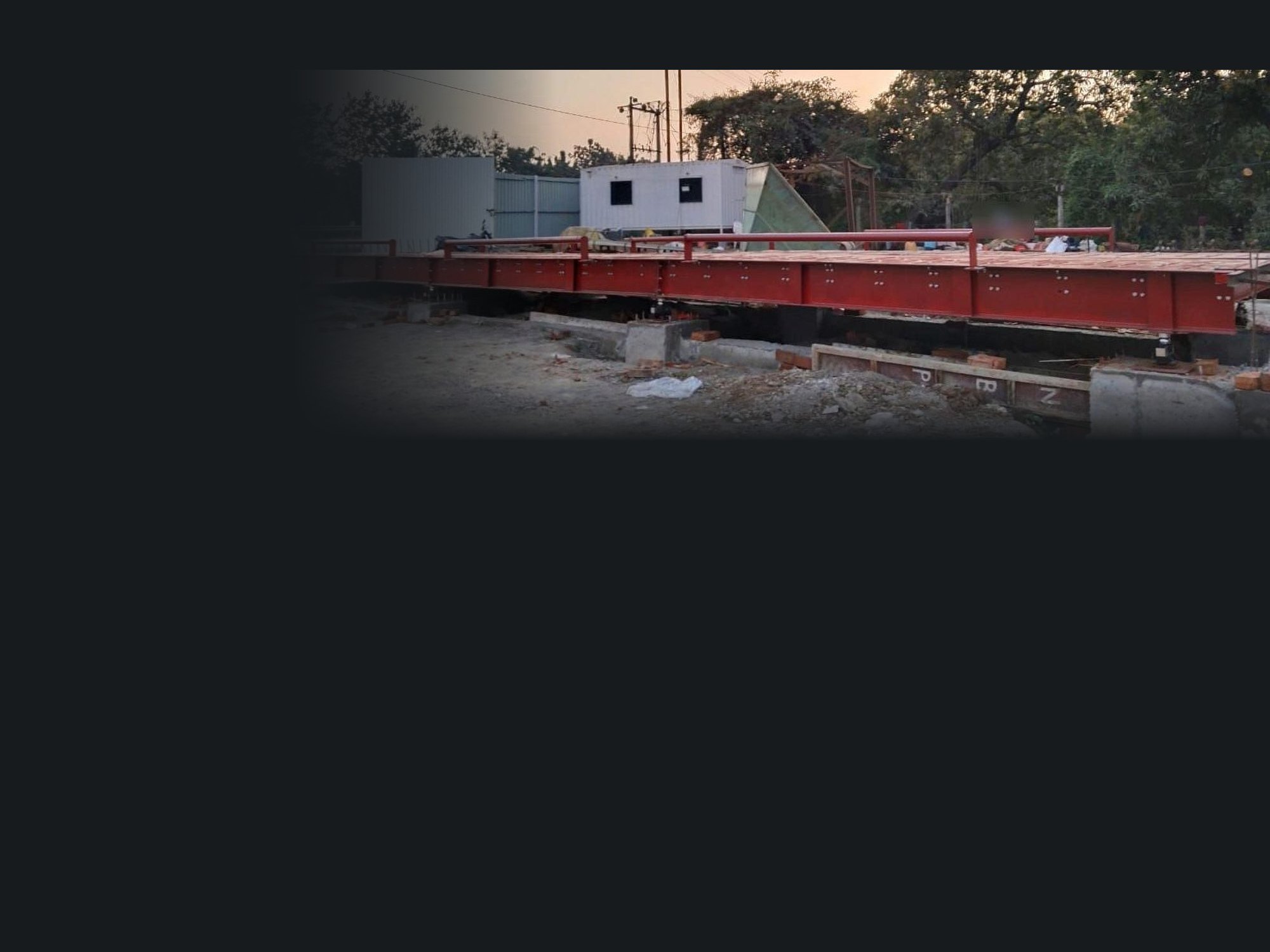
Mandla weighbridges for rice mills, millet units and the forest depots.
Mandla, the old Gond capital inside a loop of the Narmada where the river turns through the sal forests of the Maikal range, is a district of paddy, millets and forest produce. The kharif paddy of the Narmada valley and the Nainpur plain goes to the rice mills of Nainpur, Mandla and Bamhni Banjar; the kodo and kutki that the district is known for are cleaned and milled in the small millet units that have come up around Mandla, Bichhiya and Mohgaon; the Krishi Upaj Mandis at Mandla, Nainpur, Bichhiya and Niwas trade paddy, wheat, gram, lentil, maize and the millets; tendu leaf, mahua, sal seed, harra and bamboo leave the forest depots of the East and West Mandla divisions by the truck in a short season; the stone crushers on the Jabalpur and Nainpur roads and the Narmada sand ghats load tippers for the roads and the housing of the district; and the Maneri industrial area holds the district's processing, engineering and agro units. Symphony supplies weighbridges, truck scales and dharam kanta (धर्म कांटा / tol kanta) across Mandla district.
A rice mill at Nainpur, Mandla or Bamhni Banjar takes a 60 MT, 16 m pit-less steel weighbridge, stamped for trade and sized so a tractor and its double trolley of paddy stand on it together, with SMFW paddy-in and rice, bran and husk-out reports by lot; a millet processing unit, a flour mill or a mandi commission agent at Mandla, Bichhiya or Niwas 40–60 MT on 12–16 m, so a loaded 10-wheel truck and a tractor-trolley of kodo or wheat both read in one pass; a stone crusher, a sand transporter or a bauxite carrier on the Jabalpur, Dindori or Niwas road 80–100 MT on 18 m in pit-less steel or concrete (RCC), built for the axle load, with IP67/IP68 sealed load cells; a forest-produce or timber depot 40–60 MT on 12–16 m with a weatherproof cabin for the few weeks a year it works; a processing or agro unit at Maneri 60 MT on 16 m; a public weighbridge on the Jabalpur or Nainpur road 60–100 MT on 16–18 m (dharam kanta). Symphony builds it in Ahmedabad and dispatches it about 2 weeks after a commercially cleared order with PO.
Paddy in October, mahua in March, tendu in May: a Mandla weighbridge that is ready for every season.
- Paddy by the double trolley in October, kodo and kutki by the pick-up, tendu and mahua by the truck for a few weeks16 m and 60 MT at the mill, 12–16 m at the millet unit and the depot, SMFW reports by lot, group and grade.
- Red gravel over laterite on the Maikal plateau, black clay in the Narmada haveli, a river that rises fastShallow pedestals on the hard layer or deep ones below the clay; a raised pit-less platform above the flood line.
- Stone, sand and bauxite by the dense tipper on the Jabalpur and Dindori roads80–100 MT on 18 m, built for the axle load, RCC top or sealed steel, IP67/IP68 load cells.
Who needs one in Mandla: Rice mills and paddy traders of Nainpur, Mandla and Bamhni Banjar; kodo-kutki and other millet processing units of Mandla, Bichhiya and Mohgaon; commission agents and buyers at the Mandla, Nainpur, Bichhiya and Niwas Krishi Upaj Mandis; flour mills, dal mills and oil expellers; forest-produce depots and traders of tendu leaf, mahua, sal seed, harra and bamboo; timber depots of the forest divisions; stone crushers and grit suppliers on the Jabalpur, Nainpur and Dindori roads; sand transporters from the Narmada and Banjar ghats; bauxite and laterite transporters of the Maikal plateau on the Niwas and Dindori side; processing, engineering and agro units in the Maneri industrial area; brick kilns; road and irrigation contractors; transporters and warehouses on the Jabalpur, Nainpur, Dindori and Balaghat roads; public dharam kanta operators.
Also called a dharam kanta (धर्म कांटा), truck scale or weigh bridge. We also serve Nainpur, Bichhiya, Niwas, Narayanganj, Ghughri, Bijadandi, Mawai, Maneri, Bamhni Banjar, Chiraidongri, Mohgaon.
Rice mills, millet units, mandi agents and crushers across Mandla district.
Rice mills and millet processing units
From October the paddy arrives behind tractors pulling double trolleys and on trucks from the procurement centres, while rice, bran and husk leave as separate loads, and the kodo and kutki of the village groups arrive in small lots by the pick-up and leave as packed grain by the loaded truck.
Our setup: A 60 MT, 16 m pit-less steel weighbridge at the rice mill and 40–60 MT on 12–16 m at the millet unit, both stamped, with SMFW paddy-in and product-out reports by lot, a slip by group and grade for the millet, and stored tares for the unit's own vehicles.
Mandi commission agents and forest-produce depots
A commission agent at Mandla, Nainpur, Bichhiya or Niwas weighs tractor-trolleys of paddy, wheat, gram, lentil and maize against the farmer's slip, and the tendu, mahua, sal-seed and bamboo depots of the forest divisions weigh by the truck in a season that is over in a few weeks and then stand idle for the rest of the year.
Our setup: A 40–60 MT, 12–16 m pit-less steel weighbridge, stamped, with SMFW slips by farmer, lot and commodity, a stored tare for each regular tractor, a weatherproof cabin and a dust cover for the indicator, on pedestals set below the moving clay with drained approaches.
Crushers, sand ghats and bauxite transporters
Stone from the crushers on the Jabalpur and Nainpur roads, wet sand from the Narmada and Banjar ghats and bauxite from the Maikal plateau all travel by the dense tipper, whose axles carry their limit with room still left in the body, and dropped stone and wet grit wear a plain platform.
Our setup: An 80–100 MT, 18 m weighbridge in pit-less steel or RCC, built for the axle load, with an RCC top where stone is dropped, IP67/IP68 sealed load cells, a potted junction box and SMFW reports by size, ghat and vehicle.
- Mandla town and the Narmada havelithe Krishi Upaj Mandi, rice and flour mills, millet units, transporters, the Jabalpur and Dindori roads
- Nainpur and the Nainpur plainrice mills, the mandi, the junction and goods shed, paddy traders, the Balaghat and Seoni roads
- Maneri industrial areaprocessing, engineering and agro units of the industrial area
- Bichhiya, Mohgaon and Bamhni Banjarmillet units, rice mills, the Bichhiya mandi, the Kanha-side towns
- Niwas, Narayanganj and the Maikal plateaubauxite and laterite transporters, the Niwas mandi, forest depots, the Dindori road
- Ghughri, Bijadandi and Mawaiforest-produce depots, tendu and mahua traders, paddy villages
Red gravel on the Maikal plateau, black clay in the Narmada haveli: where a Mandla weighbridge should stand.
Mandla weighs by the season, and most of its weighing is done in a few crowded months. The kharif paddy comes off the Narmada valley and the Nainpur plain from October to December and reaches the mandis and the rice mills by the tractor with a double trolley behind it and by the 10-wheel truck from the procurement centres; the rice mills at Nainpur, Mandla and Bamhni Banjar earn on the yield between the paddy that goes in and the rice, bran and husk that come out, so their weighbridge is a 60 MT, 16 m pit-less steel platform, stamped for trade, and SMFW sets the paddy received against the rice, bran and husk despatched, lot by lot, with the tare of each of the mill's tractors held in memory. The kodo and kutki that give Mandla its name among the millet districts travel differently: small lots by the pick-up and the tractor-trolley from the self-help groups and the village collection points to the cleaning and milling units around Mandla, Bichhiya and Mohgaon, and then out by the truck as packed grain, so a millet unit wants a 40–60 MT, 12–16 m platform that reads a pick-up accurately at the low end and a loaded truck at the high end, with the SMFW slip by group, lot and grade so the premium paid for clean millet can be traced. The mandi commission agent at Mandla, Nainpur, Bichhiya or Niwas weighs the same tractor-trolleys of paddy, wheat, gram, lentil and maize against the farmer's slip and the buyer's truck against the invoice, and takes 40–60 MT on 12–16 m with a stored tare for every regular tractor. The forest is the second business. Tendu leaf is collected in May and June, mahua flowers in March and April, sal seed in June and harra and bamboo through the winter, and all of it is weighed at the depots of the forest divisions and the traders' godowns by the truck in a season that is over in a few weeks, so the depot weighbridge is 40–60 MT on 12–16 m, pit-less steel with a weatherproof cabin and a dust cover for the indicator, so that it stands idle for ten months and reads to class on the first morning it is needed. The stone and sand trade is heavier: crushers on the Jabalpur, Nainpur and Dindori roads and the sand ghats on the Narmada and the Banjar load tippers for the roads, the canals and the housing of the district, and bauxite and laterite from the Maikal plateau on the Niwas and Dindori side leave by the dense tipper, so that platform is 80–100 MT on 18 m in pit-less steel or concrete (RCC), built for the axle load, with IP67/IP68 sealed load cells against grit and wet sand and a potted junction box; the RCC top takes the dropped stone and carries a 25-year structural warranty. Two grounds run through the district. On the Maikal plateau and the forest side the soil is a thin red and yellow gravel over laterite and basalt, so the pedestals of a pit-less platform bear on the hard layer at a shallow depth and a pit is rarely worth cutting; in the Narmada haveli around Mandla and on the Nainpur plain the soil is black clay that cracks in May and turns soft in July, so there the pedestals are taken down to firm ground under it and the approaches are graded to a side drain. Well over a metre of rain falls between June and September and the Narmada and the Banjar rise fast, so a yard beside the river is set above the flood line and a pit-type weighbridge is given a sump and a pump-out, which is why most Mandla buyers choose a raised pit-less platform. May touches the low forties and winter nights on the plateau fog the cabin glass, so the operator's cabin gets a sunshade and a vent, and calibration with test weights is booked for a cool morning. The protected forests of the district, including the Kanha side, are not a place for a weighbridge; the platforms stand at the mills, the mandis, the depots and the crushers of the towns. A Mandla mill or millet unit should have Legal Metrology stamping, or the yearly re-verification, done in August or September with Symphony's stamping support, so the paddy trolleys and the first kodo lots of October are weighed on a verified platform.
| Recommended for | Vehicles | Capacity | Weighbridge | Type |
|---|---|---|---|---|
| Rice mill or paddy trader, Nainpur, Mandla or Bamhni Banjar | Paddy trucks, tractor with double trolley | 60 MT | 16 m | Pit-less steel, stamped |
| Millet processing unit or flour mill, Mandla, Bichhiya or Mohgaon | Pick-ups, tractor-trolleys, 10-wheel trucks | 40–60 MT | 12–16 m | Pit-less steel, stamped |
| Mandi commission agent, Mandla, Nainpur, Bichhiya or Niwas | Tractor-trolleys, 10-wheel trucks | 40–60 MT | 12–16 m | Pit-less steel, stamped |
| Forest-produce or timber depot, East or West Mandla division | Tendu, mahua and bamboo trucks | 40–60 MT | 12–16 m | Pit-less steel, stamped, weatherproof cabin |
| Stone crusher, sand or bauxite transporter, Jabalpur, Dindori or Niwas road | Loaded tippers, multi-axle trucks | 80–100 MT | 18 m | Pit-less steel or RCC, stamped |
| Public weighbridge, Jabalpur or Nainpur road | Trolleys to 40-foot trailers | 60–100 MT | 16–18 m | Pit-less steel or RCC, stamped |
Starting points only. Send your heaviest truck and daily traffic and we confirm the size.
Survey at the mill yard in Nainpur to the first stamped trolley of paddy: a Mandla order in six steps.
Six steps for your project in Mandla. Most of the waiting is the foundation curing, so the drawing comes first.
- 1 · Your traffic in MandlaTell us the heaviest vehicle you weigh (here, typically paddy trucks, tractor with double trolley), the space at the gate and the daily count. An engineer replies within one working day.
- 2 · Size and quotationOur usual starting point (rice mill or paddy trader, Nainpur, Mandla or Bamhni Banjar): 60 MT, 16 m weighbridge, Pit-less steel, stamped. The quotation comes with the foundation drawing.
- 3 · Foundation on siteYour civil contractor builds it to our drawing; a pit-type weighbridge needs a drained pit with a sump. We can check the levels before the weighbridge arrives.
- 4 · Fabrication and dispatchBuilt and tested in our Ahmedabad workshop; dispatch in about 2 weeks from a commercially cleared order with PO, then delivered and placed on your foundation.
- 5 · Installation and calibrationWeighbridge placed, load cells and indicator connected and calibrated, slip printing set up, and Legal Metrology verification supported.
- 6 · AMC and serviceAMC, breakdown visits, calibration and annual re-verification support from our technical desk, so the weighbridge stays accurate for years.
Answers for Mandla's rice millers, millet units and forest-produce traders.
Who supplies weighbridges in Mandla?
Which weighbridge suits a rice mill or a millet unit in Mandla?
Which weighbridge suits a crusher, a sand transporter or a forest depot in Mandla?
How long does a Mandla weighbridge take to arrive?
What decides the cost of a weighbridge in Mandla?
मंडला में राइस मिल, मंडी या कोदो-कुटकी इकाई के लिए धर्म कांटा कैसे स्थापित करें?
Tell us your site. We recommend the platform.
Send a site photo, vehicle size and daily vehicle count. An engineer replies within one working day.