
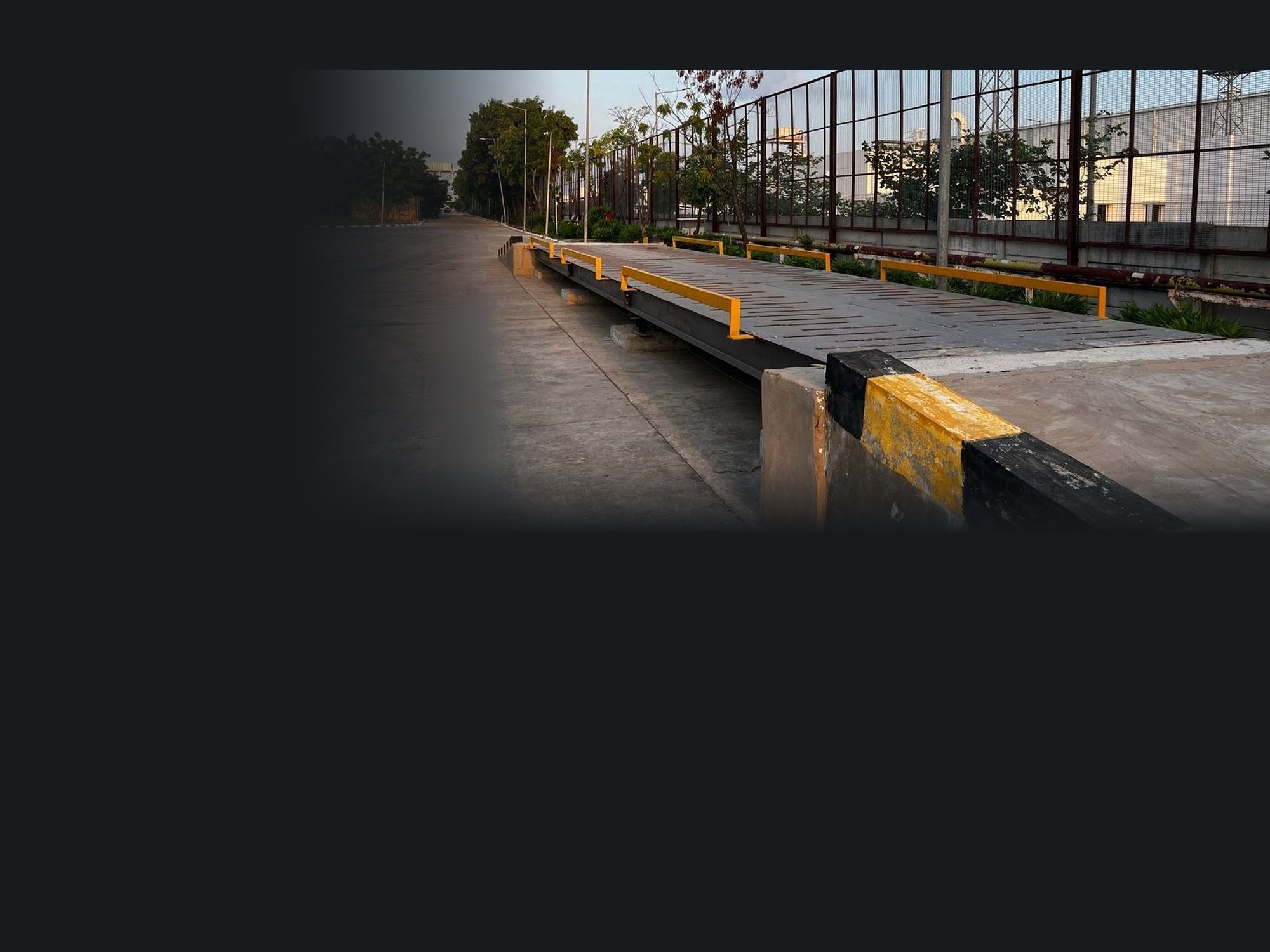
Seoni weighbridges for rice mills, mandi traders and highway crushers.
Seoni, on the Satpura plateau of southern Madhya Pradesh between the Wainganga valley and the Pench forests, is a district of paddy, wheat and maize. The canals of the Bhimgarh (Sanjay Sarovar) dam make Keolari and Barghat a paddy belt with rice mills at every market town; the Krishi Upaj Mandis at Seoni, Lakhnadon, Keolari, Barghat, Chhapara and Ghansaur trade wheat, maize, soybean, gram and lentils; stone crushers and sand suppliers feed the road and building work along the Nagpur–Jabalpur highway; the industrial area at Seoni holds processing and engineering units; and dairy, poultry and cattle-feed units work the villages. Symphony supplies weighbridges, truck scales and dharam kanta (धर्म कांटा / tol kanta) across Seoni district.
A rice mill in Seoni district usually needs a 40–60 MT, 14–16 m pit-less steel weighbridge stamped for trade, long enough for a tractor with a double paddy trolley; a mandi commission agent 40–60 MT on 12–16 m; a stone crusher or sand yard on the Nagpur–Jabalpur highway 60–80 MT on 16–18 m, or 80–100 MT in concrete (RCC) where multi-axle trailers load; a processing unit in the Seoni industrial area 60 MT on 16 m with the unmanned option (RFID, cameras, boom barrier); a public weighbridge on the highway 60–100 MT on 16–18 m (dharam kanta). Symphony builds it in Ahmedabad and dispatches it about 2 weeks after a commercially cleared order with PO.
Paddy by the double trolley, wheat by the truck, stone by the tipper: weights that hold on the Seoni plateau.
- Paddy in, rice outTwo SMFW reports per lot, one stamped mill gate.
- Black soil over basalt, a wet monsoonPedestals to rock, a raised plinth, drains that run.
- Tippers at the legal limit all year80–100 MT RCC for the highway crushers, sealed cells.
Who needs one in Seoni: Paddy, wheat, maize, soybean, gram, lentil (masoor) and tur traders and commission agents at the Seoni, Lakhnadon, Keolari, Barghat, Chhapara and Ghansaur mandis; rice mills and parboiling units of the Keolari–Barghat belt; flour mills, dal mills and oil expellers; maize buyers for the feed and starch trade; stone crushers, sand and murum suppliers and ready-mix plants on the Nagpur–Jabalpur highway; processing and engineering units in the Seoni industrial area; dairy, poultry and cattle-feed units; warehouses and cold storages; forest-produce and bamboo contractors; transporters on the Nagpur, Jabalpur, Balaghat and Chhindwara roads; public dharam kanta operators.
Also called a dharam kanta (धर्म कांटा), truck scale or weigh bridge. We also serve Lakhnadon, Keolari, Barghat, Chhapara, Ghansaur, Kurai, Dhanora.
Rice mills, maize traders, crushers and processing units across Seoni district.
Rice mills of the Bhimgarh canal belt
Paddy comes off the Keolari and Barghat fields from October, often as a double trolley behind one tractor, is bought after the moisture check and goes out as rice in bags with bran and husk by the truck; the milling outturn is checked lot by lot.
Our setup: A 40–60 MT, 14–16 m pit-less steel weighbridge, stamped, long enough for the tractor and both trolleys, with SMFW reports that keep paddy-in by grower and lot and rice-out by buyer and grade.
Maize and soybean traders
Maize comes off the plateau in October and November and again in spring, soybean in October, both bought by weight after the moisture check and sold by the truckload to feed, starch and solvent buyers; a trader's platform works from Dussehra to the end of the rabi arrivals.
Our setup: A 40–60 MT, 12–16 m pit-less steel weighbridge, stamped, with SMFW slips that carry the grower, lot, variety and moisture and daily reports by buyer.
Crushers and sand yards on the Nagpur–Jabalpur highway
Tippers and multi-axle trailers load crushed stone, grit, sand and murum at the legal limit all year for road and building work, stone dust settles on everything, and the royalty and freight run on the weight.
Our setup: A 60–80 MT, 16–18 m pit-less steel weighbridge for tippers, or 80–100 MT in concrete (RCC) where trailers load, with sealed IP67/IP68 load cells, a swept gap around the platform and the unmanned option (RFID, cameras, boom barrier) for night loading.
- Seoni mandi and the Seoni industrial areawheat, maize and soybean trade, processing and engineering units
- Keolari and the Bhimgarh canal beltpaddy arrivals, rice mills, parboiling units
- Barghatpaddy and wheat mandi, rice mills, dal and flour mills
- Lakhnadonwheat, gram and lentil mandi, oil expellers, highway transport
- Chhapara and Ghansaurmaize, soybean and gram mandis, warehouses
- Kurai and the NH 44 corridorhighway works, murum and sand suppliers, transport
Black soil over basalt, a wet monsoon and highway tippers: sizing a Seoni weighbridge.
Paddy decides the platform at a Seoni rice mill. The kharif crop comes off the Bhimgarh canal belt from October to December, and Keolari, Barghat and Seoni fill with tractor-trolleys and 10-wheel trucks of paddy for the procurement centres and the rice mills; paddy is bulky, so a double trolley is common and a 40–60 MT, 14–16 m pit-less steel weighbridge is the mill's standard, with SMFW printing the grower, lot and variety on every slip. The mill buys paddy after the moisture check, parboils or mills it, and sends rice out in bags with bran and husk going out by the truck to oil and feed buyers, so paddy-in and rice-out are kept as separate reports and the milling outturn is checked lot by lot; book Legal Metrology stamping or the annual re-verification in September, so the certificate is in hand before the first paddy trolley. Maize comes off the plateau in October and November and again from the rabi fields in spring, bought by weight after the moisture check and sold by the truckload to feed and starch buyers; soybean arrives in October, wheat and gram fill Lakhnadon and Seoni from March, and lentils follow, so a commission agent's 40–60 MT platform on 12–16 m works from Dussehra to the end of the rabi arrivals. The ground changes across the district: the Seoni and Barghat plateau is black cotton soil over basalt, which swells in the monsoon and cracks in May, so the pedestals are carried through it to rock or firm murum and the apron is cast wide; the hill fringes towards Lakhnadon and Kurai are red gravelly soil that drains fast and bears well; and the Wainganga valley around Keolari is alluvium that holds water. The monsoon brings well over a metre of rain between June and September, so every weighbridge gets a raised plinth and open drains that carry the runoff away from the plate, and a pit-type weighbridge is chosen only with a sump and pump-out. The crushers, sand and murum suppliers along the Nagpur–Jabalpur highway and the Balaghat road load tippers at the legal limit all year for road and building work, which calls for 60–80 MT on 16–18 m in pit-less steel, or 80–100 MT in concrete (RCC) where multi-axle trailers load; the RCC concrete carries a 25-year structural warranty, and sealed IP67/IP68 load cells keep stone dust out of the electrics. Winters on the plateau are cool and the summer passes 42 °C, so the cabin is shaded and the cables leave the plate in closed conduit.
| Recommended for | Vehicles | Capacity | Weighbridge | Type |
|---|---|---|---|---|
| Rice mill, Keolari, Barghat or Seoni | Double paddy trolleys, 10-wheel trucks, bagged rice | 40–60 MT | 14–16 m | Pit-less steel, stamped |
| Mandi commission agent, Seoni or Lakhnadon | Tractor-trolleys of wheat, maize, soybean and gram | 40–60 MT | 12–16 m | Pit-less steel, stamped |
| Flour mill, dal mill or oil expeller | Grain trucks, bagged flour and dal | 40–60 MT | 12–16 m | Pit-less steel, stamped |
| Stone crusher or sand yard, Nagpur–Jabalpur highway | Tippers, multi-axle trailers | 60–100 MT | 16–18 m | Pit-less steel or concrete (RCC), stamped |
| Processing or engineering unit, Seoni industrial area | Multi-axle trucks, trailers | 60 MT | 16 m | Pit-less steel, stamped, unmanned option |
| Public weighbridge, Nagpur–Jabalpur highway | Trolleys to multi-axle trucks | 60–100 MT | 16–18 m | Pit-less steel or RCC, stamped |
Starting points only. Send your heaviest truck and daily traffic and we confirm the size.
From the Keolari mandi gate to the first stamped paddy slip: six steps in Seoni.
Six steps for your project in Seoni. Most of the waiting is the foundation curing, so the drawing comes first.
- 1 · Your traffic in SeoniTell us the heaviest vehicle you weigh (here, typically double paddy trolleys, 10-wheel trucks, bagged rice), the space at the gate and the daily count. An engineer replies within one working day.
- 2 · Size and quotationOur usual starting point (rice mill, Keolari, Barghat or Seoni): 40–60 MT, 14–16 m weighbridge, Pit-less steel, stamped. The quotation comes with the foundation drawing.
- 3 · Foundation on siteYour civil contractor builds it to our drawing; a pit-type weighbridge needs a drained pit with a sump. We can check the levels before the weighbridge arrives.
- 4 · Fabrication and dispatchBuilt and tested in our Ahmedabad workshop; dispatch in about 2 weeks from a commercially cleared order with PO, then delivered and placed on your foundation.
- 5 · Installation and calibrationWeighbridge placed, load cells and indicator connected and calibrated, SMFW stored tares set up (RFID, cameras and boom barrier where ordered), and Legal Metrology verification supported.
- 6 · AMC and serviceAMC, breakdown visits, calibration and annual re-verification support from our technical desk, so the weighbridge stays accurate for years.
What Seoni's rice millers and Lakhnadon's traders ask us.
Who supplies weighbridges in Seoni?
Which weighbridge suits a rice mill in Seoni district?
Which weighbridge suits a stone crusher or a mandi trader in Seoni?
How long does a Seoni weighbridge take to arrive?
What decides the cost of a weighbridge in Seoni?
सिवनी में राइस मिल या मंडी के व्यापार के लिए धर्म कांटा कैसे स्थापित करें?
Tell us your site. We recommend the platform.
Send a site photo, vehicle size and daily vehicle count. An engineer replies within one working day.