
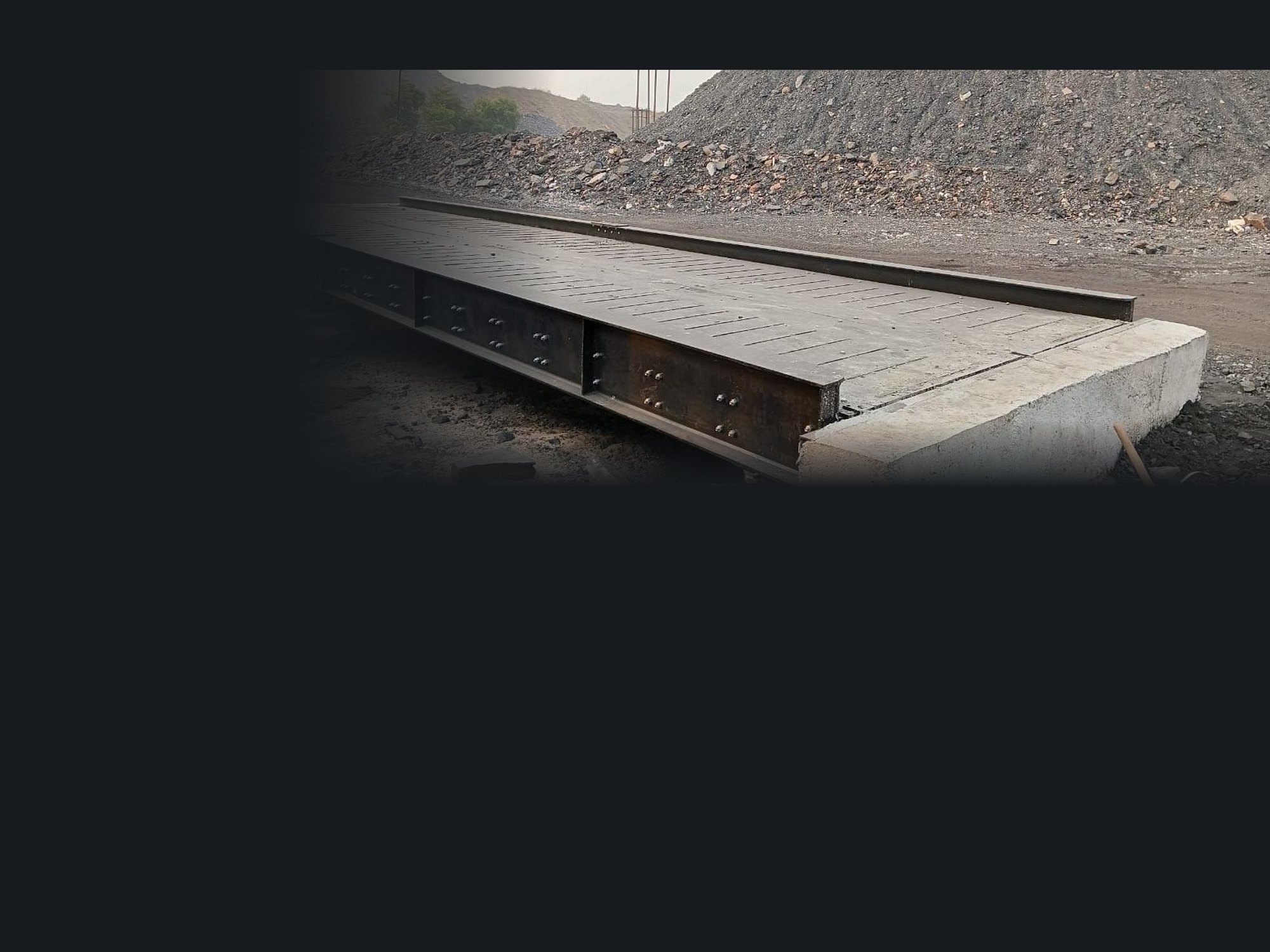
Balaghat weighbridges for rice mills, manganese and the Malanjkhand roads.
Balaghat, where the Wainganga leaves the Satpura hills for the paddy plain of eastern Madhya Pradesh, is a district of rice and ore. The tank-fed and canal-fed fields of Waraseoni, Katangi, Lalbarra, Khairlanji and Kirnapur grow the paddy that gives the district its name as the rice bowl of the state and feed the parboiling and rice mills around Balaghat, Waraseoni and Katangi; the manganese mines at Bharweli, Ukwa and Tirodi send ore by the tipper to the sidings and to the ferro-alloy furnace at Bharweli; the open-pit copper mine at Malanjkhand on the Baihar plateau keeps a fleet of contractors' tippers, tankers and trailers on the road; the Krishi Upaj Mandis at Balaghat, Waraseoni, Katangi, Lalbarra and Lanji trade paddy, wheat, gram, lentil and tur; bamboo and tendu leaf leave the forest depots by the truck; and the Garra and Sarandi industrial areas hold rice mills, an ethanol plant and engineering units. Symphony supplies weighbridges, truck scales and dharam kanta (धर्म कांटा / tol kanta) across Balaghat district.
A rice mill at Balaghat, Waraseoni or Katangi takes a 60 MT, 16 m pit-less steel weighbridge, stamped for trade, long enough for a tractor with a double paddy trolley, with SMFW paddy-in and rice, bran and husk-out reports; a mandi commission agent 40–60 MT on 12–16 m; a manganese or copper ore transporter, a crusher or a mine contractor at Bharweli, Ukwa, Tirodi or Malanjkhand 80–100 MT on 18 m in pit-less steel or concrete (RCC), built for the axle load of a dense ore tipper, with the unmanned option (RFID, cameras, boom barrier) where the gate runs around the clock; an ethanol or engineering unit at Garra or Sarandi 60 MT on 16 m; a public weighbridge on the Gondia or Seoni road 60–100 MT on 16–18 m (dharam kanta). Symphony builds it in Ahmedabad and dispatches it about 2 weeks after a commercially cleared order with PO.
A stamped weight for the rice bowl and the ore belt: why Balaghat's mills and transporters order from Symphony.
- Manganese and copper ore that reach the axle limit at half a body80–100 MT on 18 m, built for the axle load, sealed IP67/IP68 load cells against ore fines and mine-road mud.
- Black clay on the Wainganga plain, laterite and rock on the Baihar plateau, four wet months a yearPedestals below the moving clay or seated on the rock; a raised pit-less platform with drained approaches.
- Paddy by the double trolley from October, rice and bran out by the truck all year16 m and 60 MT, paddy-in and rice-out as separate SMFW reports, stored tares for the mill's own vehicles.
Who needs one in Balaghat: Rice mills, parboiling and sortex units of Balaghat, Waraseoni, Katangi, Lalbarra and Kirnapur; paddy traders and commission agents at the Balaghat, Waraseoni, Katangi, Lalbarra, Lanji, Kirnapur and Baihar mandis; manganese mines and ore transporters of Bharweli, Ukwa and Tirodi and the ferro-alloy unit at Bharweli; the copper mine at Malanjkhand and its contractors, fuel and lime suppliers; stone crushers, murum and sand suppliers on the Gondia, Seoni and Nainpur roads; rice-mill, ethanol and engineering units in the Garra and Sarandi industrial areas; bamboo, tendu-leaf and timber depots of the forest divisions; flour mills, dal mills, oil expellers and cattle-feed units; brick kilns; fly-ash brick plants; warehouses and transporters on the Gondia, Jabalpur, Seoni and Rajnandgaon roads; public dharam kanta operators.
Also called a dharam kanta (धर्म कांटा), truck scale or weigh bridge. We also serve Waraseoni, Katangi, Lalbarra, Kirnapur, Lanji, Baihar, Malanjkhand, Bharweli, Ukwa, Tirodi, Khairlanji, Paraswada, Garra.
Rice mills, ore transporters, mandi agents and forest depots across Balaghat district.
Rice mills and parboiling units
Paddy comes in by the tractor with a double trolley from October and by the truck from the mandi, rice goes out by the truck and the rake, bran goes to the oil mill and husk to the boiler, and the mill earns on the yield between the paddy weight and the rice weight.
Our setup: A 60 MT, 16 m pit-less steel weighbridge, stamped, with SMFW paddy-in and rice, bran and husk-out reports by lot, stored tares for the mill's own vehicles and, at a parboiling unit, the steamed lot reconciled against the dry.
Manganese and copper ore transport
Ore from Bharweli, Ukwa and Tirodi and from the Malanjkhand pit is dense enough to put a tipper at its axle limit at half a body, the mine roads run with mud from June to September, and the transporter is paid by the tonne against the slip at the siding or the furnace gate.
Our setup: A 100 MT, 18 m weighbridge in pit-less steel or RCC, built for the axle load, with IP67/IP68 sealed load cells, a potted junction box, SMFW reports by grade and vehicle and the unmanned option for a yard that runs around the clock.
Mandi traders and forest-produce depots
A commission agent at Lalbarra, Lanji or Baihar weighs trolleys of paddy, wheat and gram against the farmer's slip, and the bamboo, tendu-leaf and timber depots of the forest divisions weigh by the truck in a short season when every load has to be settled the same day.
Our setup: A 40–60 MT, 12–16 m pit-less steel weighbridge, stamped, with SMFW slips by farmer, lot and commodity and a stored tare for each regular tractor, on pedestals set below the moving black clay with drained approaches.
- Balaghat town and the Garra industrial arearice mills, engineering units, the Krishi Upaj Mandi, the goods shed, transporters
- Waraseoni and the Sarandi industrial arearice and parboiling mills, the ethanol plant, paddy traders, the Wainganga canal belt
- Bharweli, Ukwa and Tirodimanganese mines, the ferro-alloy unit, ore sidings and transporters
- Malanjkhand and the Baihar plateauthe copper mine and its contractors, forest depots, the Baihar mandi
- Katangi and Khairlanjirice mills, paddy mandis, brick kilns, the Gondia and Tumsar roads
- Lalbarra, Kirnapur and Lanjipaddy mandis, rice mills, oil and dal mills, the Rajnandgaon road
Wainganga clay, Baihar laterite and a monsoon that fills every pit: founding a weighbridge in Balaghat.
Balaghat has two kinds of ground and two kinds of load, and the weighbridge has to be chosen for both. On the Wainganga plain, from Waraseoni and Katangi across to Lalbarra and Khairlanji, the soil is the black clay that holds the paddy water: it swells through the monsoon, shrinks and cracks in May, and moves a foundation that sits in its top layer, so the pedestals go below the moving depth onto the firm stratum, the approaches are drained so the tractor queue does not stand in water, and most mills choose a raised pit-less platform rather than a pit, because a pit cut in this clay fills in July and needs a sump and a pump-out to stay dry. On the Baihar plateau and along the mine belt from Bharweli to Ukwa, Tirodi and Malanjkhand, the ground is red gravelly laterite over rock, which bears well on shallow pedestals but drains fast and runs with mud on the ore roads in the rains. The district takes about fourteen hundred millimetres of rain between June and September, the Wainganga and its feeders rise over their banks in a wet August, and May brings forty-four degrees, so every Symphony weighbridge here has IP67/IP68 sealed load cells, a junction box potted on site and cable in closed conduit, with an approach apron that sheds water away from the pit or the pedestals. The ore sets the capacity. Manganese ore and copper ore are dense, and a tipper from Bharweli, Ukwa or Tirodi or a contractor's truck out of the Malanjkhand pit reaches its axle limit while the body looks half full, so a transporter, a crusher or a contractor's yard takes a 100 MT weighbridge on 18 m, built for the axle load rather than the gross, in pit-less steel on pedestals or in concrete (RCC) where the platform is swept of ore fines every day; the mines run their own gate instruments, and Symphony's place is the transporters, the siding yards, the ferro-alloy gate traffic and the contractors who settle by the tonne. The paddy sets the length. From October the kharif crop comes in by the tractor with a double trolley and by the 10-wheel truck to the mills at Balaghat, Waraseoni, Katangi and Kirnapur, so a rice mill wants 16 m and 60 MT, with SMFW splitting the traffic into paddy-in and rice, bran and husk-out reports by lot and stored tares for the mill's own vehicles, because the milling yield is the mill's margin and a parboiling unit also weighs the steamed lot against the dry; the sortex mills that load rice for other states and the ethanol plant near Waraseoni that buys grain by the truck use the same reports. A mandi commission agent at Lalbarra, Lanji or Baihar takes 40–60 MT on 12–16 m for trolleys and small trucks; the bamboo, tendu-leaf and timber depots of the forest divisions weigh by the truck in season; the brick kilns weigh clay in and bricks out; and a public weighbridge on the Gondia or Seoni road takes 60–100 MT on 16–18 m for everything from a trolley to a 40-foot trailer. The Kanha tiger reserve and its buffer on the Baihar side are protected areas, and no weighbridge work is proposed there; the ore belt and the paddy plain lie outside them. After installation the weighbridge is calibrated with test weights and presented to Legal Metrology with Symphony's stamping support; Balaghat buyers time it for September, so the verification is done before the first paddy trolley of the season.
| Recommended for | Vehicles | Capacity | Weighbridge | Type |
|---|---|---|---|---|
| Rice mill or parboiling unit, Balaghat, Waraseoni or Katangi | Paddy trucks, tractor with double trolley | 60 MT | 16 m | Pit-less steel, stamped |
| Manganese ore transporter or mine contractor, Bharweli, Ukwa or Tirodi | Loaded ore tippers, 10- and 12-wheelers | 80–100 MT | 18 m | Pit-less steel or RCC, stamped, unmanned option |
| Copper-mine contractor or supplier, Malanjkhand | Tippers, fuel and lime tankers, multi-axle trailers | 100 MT | 18 m | Pit-less steel or RCC, stamped, unmanned option |
| Mandi commission agent or paddy trader, Lalbarra, Lanji or Kirnapur | Tractor-trolleys, 10-wheel trucks | 40–60 MT | 12–16 m | Pit-less steel, stamped |
| Ethanol or engineering unit, Garra or Sarandi industrial area | Grain trucks, tankers, steel trucks | 60 MT | 16 m | Pit-less steel, stamped |
| Stone crusher, sand yard or public weighbridge, Gondia, Seoni or Nainpur road | Tippers to 40-foot trailers | 60–100 MT | 16–18 m | Pit-less steel or RCC, stamped |
Starting points only. Send your heaviest truck and daily traffic and we confirm the size.
From the mill-yard drawing at Waraseoni to the first stamped paddy trolley: how a Balaghat order runs.
Six steps for your project in Balaghat. Most of the waiting is the foundation curing, so the drawing comes first.
- 1 · Your traffic in BalaghatTell us the heaviest vehicle you weigh (here, typically paddy trucks, tractor with double trolley), the space at the gate and the daily count. An engineer replies within one working day.
- 2 · Size and quotationOur usual starting point (rice mill or parboiling unit, Balaghat, Waraseoni or Katangi): 60 MT, 16 m weighbridge, Pit-less steel, stamped. The quotation comes with the foundation drawing.
- 3 · Foundation on siteYour civil contractor builds the concrete pedestals to our drawing; we can check the levels before the weighbridge arrives.
- 4 · Fabrication and dispatchBuilt and tested in our Ahmedabad workshop; dispatch in about 2 weeks from a commercially cleared order with PO, then delivered and placed on your foundation.
- 5 · Installation and calibrationWeighbridge placed, load cells and indicator connected and calibrated, SMFW stored tares set up (RFID, cameras and boom barrier where ordered), and Legal Metrology verification supported.
- 6 · AMC and serviceAMC, breakdown visits, calibration and annual re-verification support from our technical desk, so the weighbridge stays accurate for years.
Rice millers, ore transporters and mandi agents of Balaghat: the questions we answer most.
Who supplies weighbridges in Balaghat?
Which weighbridge suits a rice mill in Balaghat or Waraseoni?
Which weighbridge suits a manganese or copper ore transporter at Bharweli, Ukwa or Malanjkhand?
How long does a Balaghat weighbridge take to arrive?
What decides the cost of a weighbridge in Balaghat?
बालाघाट में राइस मिल, मैंगनीज परिवहन या मंडी व्यवसाय के लिए धर्म कांटा कैसे स्थापित करें?
Tell us your site. We recommend the platform.
Send a site photo, vehicle size and daily vehicle count. An engineer replies within one working day.