
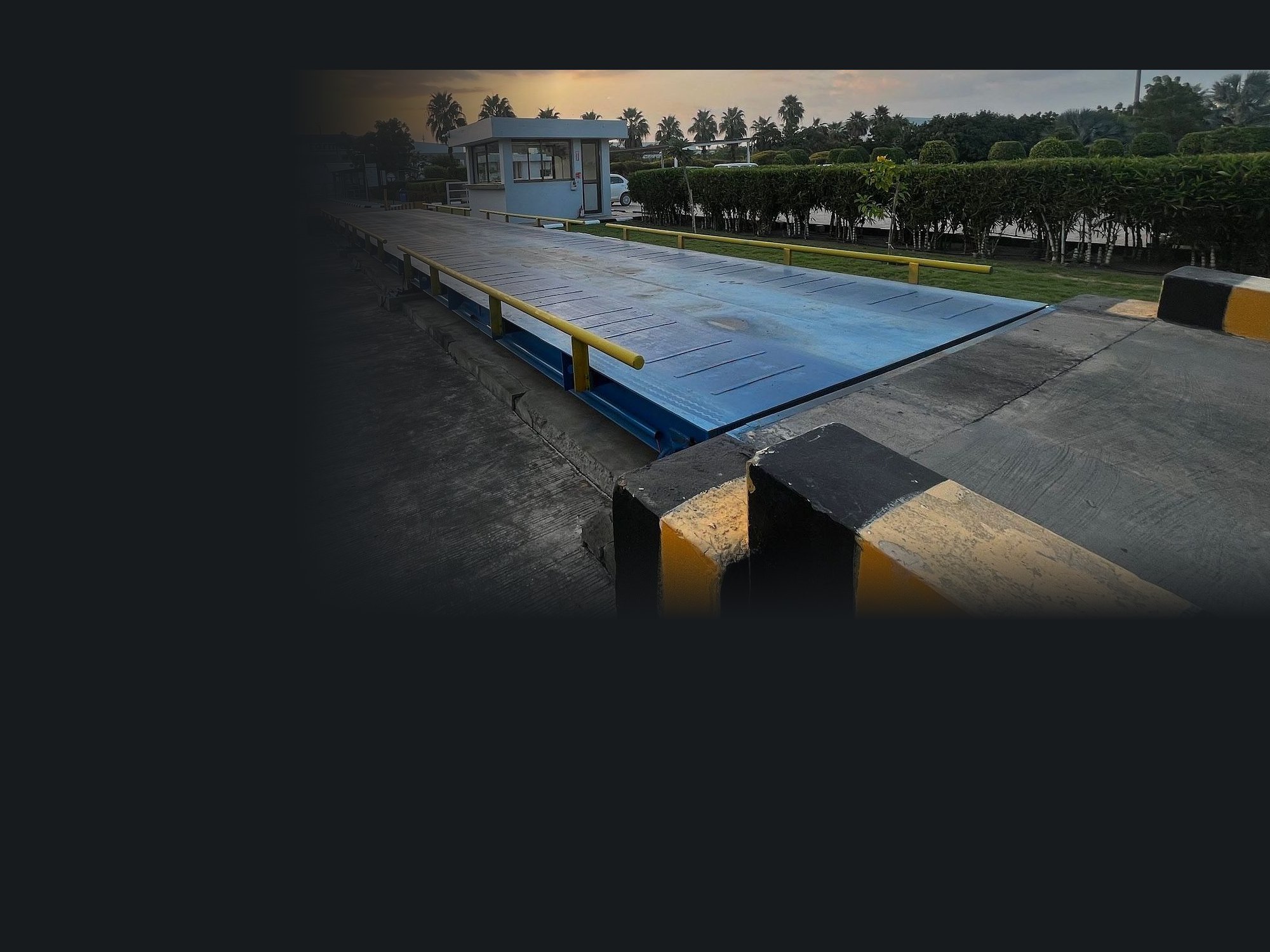
Mathura weighbridges for foundries, tanker yards and temple-town traders.
Mathura works as a pilgrim town and an industrial district at the same time. Vrindavan, Govardhan and Barsana keep temples, dharamshalas and sweet and dairy traders busy through the year, which means a steady flow of building material, grain, sugar and milk products on heavy trucks. The industrial side is just as real: foundries at Foundry Nagar, trades around the Mathura refinery area, warehouses along the Delhi–Agra highway at Kosi Kalan and Chhata, and mustard and bajra from the farms of the Braj region. Symphony supplies weighbridges, truck scales and dharam kanta (धर्म कांटा / तौल कांटा) to Mathura, Vrindavan, Chhata, Kosi Kalan and Govardhan.
A foundry or machine shop at Foundry Nagar usually fits a 40–60 MT, 12–14 m pit-less steel weighbridge; a fuel, bitumen or tanker operator around the refinery area should plan 60 MT on 18 m in heavy steel or concrete (RCC); a grain or mustard trader at the Mathura or Chhata mandi fits 60 MT on 16 m with SMFW slips; a building-material dealer supplying the Vrindavan and Govardhan construction trade can look at 80–100 MT on 18 m; and a warehouse at Kosi Kalan should plan 80–100 MT on 18 m. Everything is built at our Ahmedabad works; your contractor only prepares a level base to the drawing we send.
Foundry metal, tank trucks and pilgrim-season roads: a weighing yard that keeps moving.
- A queue inside your own gateA long stopping lane and a separate exit keep weighing trucks off the congested pilgrim-season roads.
- Full-length platforms for tankersAn 18 m platform puts the whole tank truck on at once, so the reading is the whole vehicle.
- A pit-less build for flat groundRaised pedestals and approaches sloped away from the platform keep rain water off the load cells.
Who needs one in Mathura: Foundries and machine shops at Foundry Nagar; trades around the Mathura refinery area, such as transporters, bitumen and fuel dealers and fabrication shops; sweet, khoya and dairy traders; grain, mustard and bajra merchants at the Mathura and Chhata mandis; cold stores and godowns; building-material and cement dealers serving temple and dharamshala construction; warehouses at Kosi Kalan; transporters and public weighing operators.
Also called a dharam kanta (धर्म कांटा), truck scale or weigh bridge. We also serve Vrindavan, Chhata, Kosi Kalan, Govardhan, Baldev, Raya, Farah.
Foundry owners, fuel dealers and mandi traders across Mathura and Vrindavan.
Foundry and casting units
Pig iron and scrap come in and castings leave by weight, so billing on both sides rests on the slip.
Our setup: Fit: 40–60 MT, 12–14 m, pit-less steel.
Tank trucks around the refinery area
A long vehicle with weight spread over several axles must stand fully on the platform.
Our setup: Our choice: a 60 MT, 18 m platform in heavy steel or concrete (RCC).
Temple-town construction supply
Cement, steel and sand arrive in a steady stream for dharamshala and temple works.
Our setup: Suggested build: 80–100 MT on 18 m in concrete (RCC).
- Foundry Nagar, Mathurafoundries, castings and machine shops
- Mathura refinery areatransporters, fuel and bitumen dealers and fabrication shops
- Kosi Kalan and Chhatawarehouses, mandi traders and small manufacturing units
- Vrindavan and Govardhansweet and dairy traders and building-material dealers
Festival crowds, flat plain and monsoon water: where a Mathura weighbridge should stand.
Mathura’s calendar shapes its weighbridges as much as its industry does. Around Janmashtami, Holi and the Govardhan parikrama seasons the town fills with pilgrims, and trucks carrying sugar, flour, milk products and construction material add to the road crowding, so a yard that needs weighing has to be off the congested road and have room to queue inside its own boundary. We therefore advise a long stopping lane before the platform and an exit that does not cross the inbound line. The industrial side asks different things. A foundry buys pig iron and scrap by weight and sells castings by weight, so the platform has to handle concentrated loads and a reading that holds on a hot, dusty yard; a steel or concrete (RCC) platform, IP68/IP69K sealed load cells and an indicator in a sealed box is the answer. Tank trucks around the refinery area need a longer platform so that the whole vehicle stands on at once, which is why we plan 18 m for tankers rather than a short platform. Sweet and dairy traders weigh smaller lots in the early hours, so a quick indicator and a printer beside the cabin matter more than extra length. Mathura sits on the flat Yamuna alluvial plain, so we plan drainage and avoid a deep pit where the water table is high, preferring a pit-less platform on raised pedestals with approaches sloped away from the platform. A temple-town contractor who rents a yard can place a modular weighbridge on any hard, level slab and take it away when the project ends.
| Recommended for | Vehicles | Capacity | Weighbridge | Type |
|---|---|---|---|---|
| Foundry or machine shop | Pig iron and scrap in, castings out | 40–60 MT | 12–14 m | Pit-less steel with party-wise slips |
| Fuel, bitumen or tanker operator | Tank trucks around the refinery area | 60 MT | 18 m | Heavy steel or concrete (RCC), full-length platform |
| Grain, mustard or bajra trader | Seasonal trucks and tractor-trolleys at the mandi | 60 MT | 16 m | Pit-less steel with SMFW and a cabin printer |
| Building-material dealer for temple construction | Cement, steel and sand on heavy trucks | 80–100 MT | 18 m | Concrete (RCC) built for hard axle landings |
| Sweet, khoya or dairy trader | Small lots weighed in the early hours | 10–30 MT | 7–9 m | Compact platform with a quick indicator and printer |
| Warehouse at Kosi Kalan or Chhata | Closed multi-axle trailers loading out | 80–100 MT | 18 m | Concrete (RCC) or heavy steel, with an optional RFID and boom-barrier gate |
Starting points only. Send your heaviest truck and daily traffic and we confirm the size.
From the yard layout to the first printed slip: a Mathura weighbridge in six steps.
Six steps for your project in Mathura. Most of the waiting is the foundation curing, so the drawing comes first.
- 1 · Your traffic in MathuraTell us the heaviest vehicle you weigh (here, typically pig iron and scrap in, castings out), the space at the gate and the daily count. An engineer replies within one working day.
- 2 · Size and quotationOur usual starting point (foundry or machine shop): 40–60 MT, 12–14 m weighbridge, Pit-less steel with party-wise slips. The quotation comes with the foundation drawing.
- 3 · Foundation on siteYour civil contractor builds the concrete pedestals to our drawing; we can check the levels before the weighbridge arrives.
- 4 · Fabrication and dispatchBuilt and tested in our Ahmedabad workshop; dispatch in about 2 weeks from a commercially cleared order with PO, then delivered and placed on your foundation.
- 5 · Installation and calibrationWeighbridge placed, load cells and indicator connected and calibrated, SMFW stored tares set up (RFID, cameras and boom barrier where ordered), and Legal Metrology verification supported.
- 6 · AMC and serviceAMC, breakdown visits, calibration and annual re-verification support from our technical desk, so the weighbridge stays accurate for years.
What Mathura foundry owners, tanker operators and mandi traders ask first.
Who supplies weighbridges in Mathura?
What capacity does a Mathura foundry need?
Why does a tanker need 18 m?
Do sweet and dairy traders need a big weighbridge?
Can a pit-less platform cope with Mathura rain?
How do pilgrim-season crowds affect weighing yards?
Can a contractor who rents a yard for a temple or dharamshala project use a weighbridge?
How long before a Mathura foundry or yard can weigh its first truck?
How is a Mathura weighbridge quote worked out?
मथुरा में फाउंड्री, टैंकर या गोदाम के लिए वेब्रिज की योजना कैसे बनाएँ?
Tell us your site. We recommend the platform.
Send a site photo, vehicle size and daily vehicle count. An engineer replies within one working day.