
Unmanned weighbridge: what it saves and what can go wrong.
How an unmanned weighbridge works with RFID, sensors, cameras and barriers, what it saves a plant, the six things that go wrong and how to plan the lane.
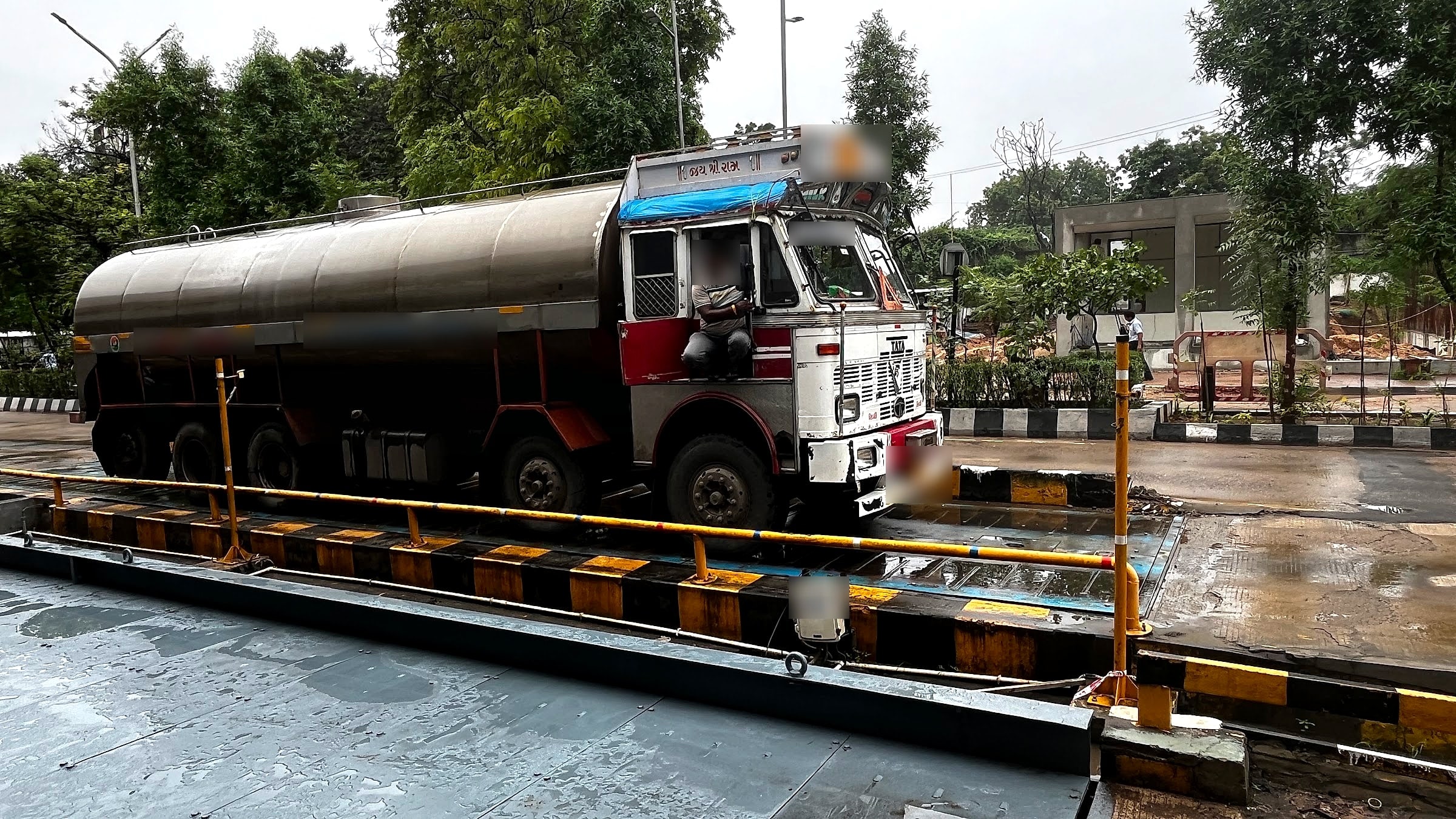
An unmanned weighbridge weighs trucks with no operator at the platform. An RFID tag identifies the vehicle, infrared sensors confirm it is fully on the weighbridge, the controller saves the weight with camera photos, and a boom barrier releases the truck. It saves operator hours and makes weighment tampering much harder when the lane, UPS backup and a manual fallback routine are planned first. It still needs Legal Metrology verification and re-verification every 12 months.
Short answer: an unmanned weighbridge weighs trucks with no operator at the platform. An RFID tag names the vehicle, sensors confirm it stands fully on the weighbridge, a controller records the weight with camera photos, and a barrier lets the truck out. It saves operator hours and makes weighment tampering much harder, but only if the lane, power backup and fallback routine are planned before it goes live.
Many plants first think of an unmanned weighbridge after a dispute: a slip that does not match the gate register, a truck weighed twice, or a night shift with no one at the cabin. This guide explains each part of the system, the savings you can expect, the problems we see on real sites, and a short checklist for your lane. For the full component list, see the Symphony unmanned weighbridge system.
The parts, and what each one does
| Part | Job in the lane | What to ask the supplier |
|---|---|---|
| RFID reader and tags | Reads a tag on the windshield and links the truck to its trip and material | Spare tags, how a lost tag is blocked, reader position before the ramp |
| Position sensors | Infrared beams at each end check that no wheel is off the platform | Beam height, cleaning routine, what happens if a beam is blocked |
| LED display and PA | Tell the driver to move forward, stop or back up | Languages for voice prompts, readability in sunlight |
| Traffic lights | Red and green for entry and exit | Who controls them during a manual weighment |
| Boom barriers | Stop entry until the platform is clear; release the truck after the weight is saved | Opening time, manual release, loop detector so the boom never lands on a vehicle |
| IP cameras | Photo of the truck and the platform saved with every weighment | Night vision, angles that show the full platform, storage period |
| Controller and software | Runs the cycle and stores the record with the ticket | ERP link, user rights, audit trail, slip printing or sharing |
On a Symphony system the RFID reader uses UHF windshield tags, the infrared pair covers up to 15 m, and the barrier boom opens in about 0.9 s. The weight itself still comes from the same weighbridge, load cells and indicator as a manned site, so load cell choice matters just as much.
What it saves
- Operator hoursOne supervisor can watch several lanes from the office instead of one operator per shift at each cabin.
- Weighment fraudNo one at the platform means no one to type a figure, swap a slip or weigh a friend's truck twice. Every record carries photos.
- Wrong positioningThe weight is only saved when both sensor beams confirm the truck is fully on the platform.
- Night and holiday weighingThe lane runs round the clock, so trucks do not wait for an operator to arrive.
- Data entry errorsVehicle, party and material come from the tag and the ERP, not from typing at the cabin.
The biggest gain is usually trust. Purchase, stores and accounts can all see the same record with the same photos, which ends most arguments about a weighment. The slip format guide shows what a complete record should include.
Six things that go wrong, and how to prevent them
| Problem | Effect | Prevention |
|---|---|---|
| Tag swapping | Wrong truck on the record | Camera photo with every weighment; tag blocked when the trip ends; tags fixed to the windshield, not loose cards |
| Truck not fully on | Weight reads low | Sensor beams at both ends; platform length matched to the longest vehicle |
| Power cut mid-weighment | Record lost, barrier stuck | UPS for the controller, indicator, PC and cameras; barrier with manual release |
| Network or ERP down | Trucks queue at the barrier | Software that stores locally and syncs later; a written fallback routine |
| Dirty or misaligned sensors | Lane stops or weighs too early | Weekly cleaning of beams and camera glass; check alignment after any knock |
| Driver confusion | Lane blocked, slow weighing | Clear LED and voice prompts, painted stop lines, a one-page briefing for transporters |
None of these is a reason to avoid automation. They are the reason to plan the lane properly and to agree on a manual mode for the day something fails.
The rules do not change
An unmanned weighbridge is still a weighing instrument used for trade. It needs Legal Metrology verification before use and re-verification every 12 months, exactly like a manned weighbridge. Automation adds a record of who weighed what and when; it does not replace the stamp. The calibration and stamping guide explains the process.
Planning your lane: a short checklist
- Traffic flowStraight entry and exit, room for a waiting truck before the first barrier, no turning on the platform.
- Platform sizeLong enough for your longest vehicle with sensors at both ends. See the capacity guide.
- PowerA stable supply with a CVT and a UPS sized for the whole lane, not only the PC.
- Network and ERPWho builds the ERP link, what data goes across, and what happens when it is offline.
- TagsHow tags are issued, how many spares, and who blocks a lost tag.
- Fallback modeA written step-by-step for manual weighing, with a named person who can switch it on.
- Civil workPoles, cable ducts, barrier bases and earthing planned with the weighbridge foundation.
Can an existing weighbridge be made unmanned?
Often, yes. If the weighbridge, load cells and indicator are healthy and the approach allows a straight lane, the RFID, sensors, barriers, display and cameras can be added around it. An engineer first checks the platform, the indicator connection and the space for poles and barriers. If the existing weighbridge is short for today's trucks, it is better to fix that first. For the software side, see the weighbridge software guide.
Where unmanned weighing fits best
Sites with many trucks a day, round-the-clock dispatch or a history of weighment disputes get the most from it: cement, mining, sugar, textile, construction and agriculture are typical. A site with a few trucks a day and a trusted operator may be better served by SMFW Weighment Software and cameras alone.
Why plan it with Symphony
- One supplier for the full laneWeighbridge, load cells, indicator, SMFW Weighment Software and the unmanned controller, sensors, barriers and cameras from one team.
- Sealed load cellsIP68/IP69K cells and Class III accuracy, with a model approval certificate and manufacturer licence under Legal Metrology.
- Track record9,780+ installations, ISO 9001:2015 certified, with free civil consultation for the lane layout.
- DispatchAbout 2 weeks from a commercially cleared order with PO.
Send us the number of lanes, trucks per day and your ERP, and we propose the controller, sensors, barrier and camera set. Call +91 94092 42100 or WhatsApp +91 63525 86656.
Questions, answered.
What is an unmanned weighbridge?
How does RFID work on a weighbridge?
Does an unmanned weighbridge still need Legal Metrology stamping?
What happens if the power or network fails?
Can my existing weighbridge be converted to unmanned?
अनमैन्ड (मानवरहित) वेब्रिज क्या होता है?
Tell us your site. We recommend the platform.
Send a site photo, vehicle size and daily vehicle count. An engineer replies within one working day.